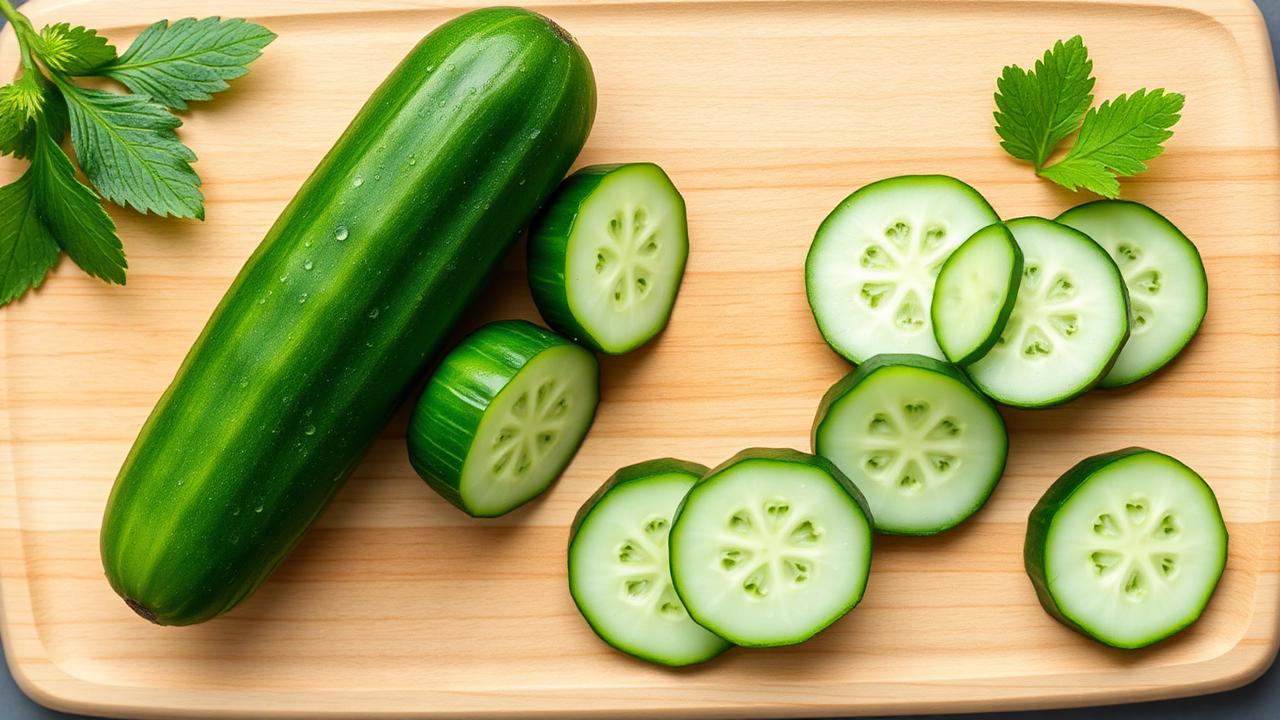
Yes — cucumber is low FODMAP up to 1/2 cup (75g) per sitting.Monash University confirms cucumber is a green-light vegetable at typical salad servings.
Monash Portion Table
Form
Low FODMAP Serving
Notes
Common cucumber
1/2 cup sliced (75g)
Green
Larger serving (100g+)
Moderate
May become an issue for sensitive individuals
Pickled cucumber
2 spears (~30g)
Green — check for onion/garlic in brine
Cucumber juice
1/2 cup (125ml)
Green
Why Cucumber Is Gentle on the Gut
Cucumber is 95% water with minimal fermentable carbohydrates. It contains trace fructans, which is why Monash sets a portion guide rather than "unlimited."
Best Ways to Enjoy Cucumber
Greek-style salad with lactose-free feta, tomato, olives
Cucumber-mint water for hydration
Tzatziki made with lactose-free yogurt (skip garlic, use garlic-infused oil)
Sushi rolls with rice, cucumber, and cooked salmon
Educational content only. Not medical advice. Consult a registered dietitian for personalized recommendations.
Why This Matters for IBS Sufferers
For individuals managing Irritable Bowel Syndrome (IBS), understanding which foods are safe and in what quantities is paramount to minimizing symptoms and improving quality of life. Cucumber, being largely water and very low in fermentable carbohydrates, is a highly valuable vegetable in a low-FODMAP diet. Its inclusion allows for dietary variety and nutrient intake without triggering digestive distress that often accompanies high-FODMAP foods.
The "green light" status for a significant portion means it can be a reliable staple, especially when many other common vegetables (like onion, garlic, certain cruciferous vegetables) are restricted or limited. This helps combat the feeling of restriction that can be common on a low-FODMAP diet, providing a refreshing and versatile option for salads, snacks, and adding bulk to meals without adding high-FODMAP content.
Moreover, its high water content is beneficial for overall gut health and can assist with bowel regularity, which is often a challenge for those with IBS-C (Constipation-predominant IBS). The minimal fiber present is also typically well-tolerated, unlike the higher, more fermentable fibers found in some other vegetables.
Common Mistakes to Avoid When Eating Cucumber on a Low-FODMAP Diet
While cucumber is a low-FODMAP hero, it's easy to inadvertently turn a healthy choice into a high-FODMAP meal through incorrect pairings or preparations.
Assuming all pickles are safe: As noted previously, traditional pickled cucumbers (gherkins/cornichons) are almost universally made with garlic and sometimes onion in the brine. Even if the cucumber itself is low FODMAP, the infused liquid makes the product high FODMAP. Always check ingredient lists for "garlic," "garlic powder," "onion," or "onion powder." Look for specifically labeled "low FODMAP pickles" or make your own using low-FODMAP vinegars and spices.
Overlooking high-FODMAP sauces and dressings: A plain cucumber salad is fine, but adding a conventional ranch dressing, creamy dressings containing buttermilk or garlic, or even some vinaigrettes with high-FODMAP emulsifiers or sweeteners can negate the benefits. Stick to simple oil and vinegar dressings (check vinegar type, e.g., balsamic is high FODMAP in larger amounts) or low-FODMAP commercial options.
Ignoring portion sizes in mixes: While a 1/2 cup of cucumber is safe, combining it with other "green light" items that have moderate serving sizes can lead to FODMAP stacking. For instance, pairing a large portion of cucumber with moderate amounts of bell pepper (red bell pepper is safe up to 1/3 cup, yellow up to 1/4 cup) or tomato (safe up to 1/4 cup) in a single meal could accumulate fructans or other FODMAPs. Be mindful of total serving sizes of all ingredients in a mixed dish.
Relying on "all natural" or "organic" labels for FODMAP safety: These labels refer to how the food was grown or processed, not its FODMAP content. A product can be organic and still contain high-FODMAP ingredients like honey, agave nectar, or onion. Always scrutinize the ingredient list.
Failing to wash and peel (sometimes): While not strictly required for FODMAP purposes, some individuals find that the skin of cucumbers (and other fruits/veg) can be harder to digest, regardless of FODMAP content, due to its texture or insoluble fiber. If you experience discomfort, consider peeling the cucumber before consumption.
Meal Stacking & Portion Combinations
The low-FODMAP diet emphasizes mindful portion control, especially when combining multiple "green light" ingredients in a single meal. Since cucumber is predominantly water and very low in FODMAPs, it's an excellent filler that can allow for smaller, safe portions of other items without leaving you feeling unsatisfied.
Scenario 1: Salad Base
Safe: 1/2 cup (75g) sliced cucumber + 1/4 cup (45g) bell pepper (red) + 1/4 cup (40g) tomato (common) + 1/2 cup (28g) leafy greens (e.g., spinach) + 2 tbsp olive oil + 1 tbsp red wine vinegar.
Why it works: Each component is within its low-FODMAP serving size, and their primary FODMAPs (if any) are generally different or present in very low amounts, minimizing stacking.
Scenario 2: Snack Plate
Safe: 1/2 cup (75g) cucumber sticks + 1-2 oz (30-60g) cheddar cheese + 1/4 cup (32g) grapes.
Why it works: Cucumber is safe, cheddar is naturally lactose-free, and grapes are low FODMAP up to 1 cup (150g), providing a balanced and filling snack.
Scenario 3: Stir-fry (post-reintroduction)
Safe: 1/2 cup (75g) cucumber (added at the end for crunch) + 1 cup (75g) bok choy + 1 cup (75g) carrot + 1/2 cup (75g) bean sprouts + 2 tbsp garlic-infused oil.
Why it works: All vegetables are within low-FODMAP servings, and garlic flavor is achieved safely with infused oil. Cucumber adds texture without adding FODMAPs.
Table: Maximizing Your Low-FODMAP Plate with Cucumber
Scenario
Cucumber Serving
Paired Low-FODMAP Foods (Examples)
FODMAP Category Synergy/Considerations
Lunch Salad
1 cup (150g)
Lettuce, small amount of carrot, 1/4 cup canned chickpeas (rinsed), small portion of firm tofu
Cucumber acts as bulk, allowing chickpeas (GOS) and tofu (GOS/fructans in larger amounts) to be eaten safely in small portions.
Cucumber provides a crisp vehicle for dip, reducing need for high-FODMAP crackers.
Dinner Side
1/2 cup (75g) cubed
Roasted chicken, steamed green beans (75g), quinoa (1 cup cooked)
Cucumber adds freshness and hydration without adding multiple FODMAP categories to a meal already containing other GOS/fructan sources (chicken is free, green beans have moderate sorbitol).
Refreshing Drink
Slices/chunks
Water, fresh mint, lemon slices
Purely hydration, no FODMAP concerns whatsoever.
Cooking, Prep & Storage Tips
Cucumber's versatility extends to its preparation and storage, ensuring you always have a fresh, low-FODMAP option on hand.
Preparation:
Washing: Always wash fresh cucumbers thoroughly under running water, even if you plan to peel them.
Peeling: This is optional. The skin contains some nutrients and fiber. However, if you find the skin tough or difficult to digest, or if you're concerned about wax coatings on conventional cucumbers, peeling is a good option.
Slicing/Chopping:
Rounds: Great for dipping, sandwiches, or as a garnish.
Sticks/Spears: Perfect for snack platters, crudités, or adding to water bottles.
Cubed: Ideal for salads, salsas, or tzatziki.
Ribbons: Use a vegetable peeler to create thin ribbons for decorative salads, wraps, or as a pasta alternative.
Seeding (Optional): Large cucumbers, especially older ones, can have large, watery seeds. While not a FODMAP issue, some people prefer to scoop out the seeds using a spoon for a firmer texture in salads or dishes where excess water isn't desired.
Cooking:
Cucumber is typically eaten raw. However, it can be gently warmed or briefly sautéed in dishes where it's meant to soften slightly, like in some Asian-inspired stir-fries, but avoid overcooking to maintain its texture and freshness. When added to warm dishes, it’s best to incorporate it towards the end of cooking.
Storage:
Whole Cucumbers: Store whole, unpeeled cucumbers in the crisper drawer of your refrigerator for up to a week. Avoid storing them next to ethylene-producing fruits like apples, bananas, and tomatoes, which can accelerate spoilage.
Cut Cucumbers: Once cut, cucumbers tend to lose moisture and become mushy. Store cut cucumber in an airtight container in the refrigerator. To help maintain crispness, place a damp paper towel over the cut pieces before sealing the container. Consume within 2-3 days for best quality.
Freezing: Cucumber generally does not freeze well for raw consumption due to its high water content, which causes it to become very soft and watery upon thawing. However, if you intend to use it in smoothies or infused water where texture isn't paramount, it can be frozen. Slice or dice and freeze on a baking sheet before transferring to a freezer-safe bag.
Testing Your Personal Tolerance (Reintroduction Guidance)
The low-FODMAP diet consists of three phases: Elimination, Reintroduction, and Personalization. Monash University's guidelines for cucumber are based on generalized data, but your personal tolerance may vary. After the elimination phase, you can test your individual response to larger servings of cucumber during the reintroduction phase.
Steps for Reintroduction:
Choose a "Challenge Day": Select a day when you are feeling well and have no other new foods or stressors. Ensure your baseline symptoms are minimal.
Isolate Cucumber: For 1-3 days, eat only low-FODMAP foods (that you know you tolerate) except for the food you are challenging. This ensures you can isolate any symptoms to the cucumber.
Start Small:
Day 1: Consume a double portion of the green-light serving, perhaps 1 cup (150g) of sliced cucumber.
Observe Symptoms: Monitor your symptoms for the next 24-48 hours. Use a symptom tracker to record details (type, severity, timing of symptoms).
Increase Slowly (if tolerated):
Day 2 (if Day 1 was symptom-free): Try an even larger portion, for example, 1.5 - 2 cups (225g - 300g) of sliced cucumber.
Observe Symptoms: Continue monitoring for 24-48 hours.
Record and Conclude:
If you experience symptoms, you've found your tolerance level. You may tolerate 1 cup but not 2 cups.
If you remain symptom-free at very large portions, cucumber is likely a "full green light" food for you, meaning you can eat it freely without specific portion restrictions due to FODMAPs (though general healthy eating principles still apply).
Pause and Reset: After challenging cucumber, return to strict low-FODMAP eating for 2-3 days to allow your gut to "reset" before challenging another FODMAP group or food.
What you are testing for: Cucumber is very low in all FODMAPs, but Monash notes trace fructans. Reintroducing larger amounts will help identify if those trace fructans become problematic for you or if you have an unlimited tolerance.
Related Low-FODMAP Alternatives
While cucumber is generally very safe, having alternative low-FODMAP options ensures variety and caters to personal preference or specific recipe needs.
Category
Low-FODMAP Alternative
Typical Serving Size (Monash Green Light)
Notes
Crunchy Veggies
- Celery
1/4 stalk (10g)
Green in small amounts, but fructans increase rapidly. Careful with stacking.
- Radishes
4 radishes (75g)
Fresh, peppery crunch. Great in salads or as a snack.
- Bell Peppers (Red)
1/3 cup sliced (43g)
Sweet and crunchy. Avoid green bell peppers, which are higher in fructans.
Watery/Hydrating Veggies
- Zucchini
1/2 cup diced (65g)
Mild flavor, versatile for cooking or raw in salads.
- Lettuce (various)
Unlimited
Romaine, butter, iceberg, spinach – excellent bases for salads.
- Tomato (Common)
1/4 cup diced (40g)
Adds juiciness and acidity. Often paired with cucumber.
Pickled Options
- Olives (Black/Green)
15g (Monash list)
Salty, umami flavor. Good addition to salads or as a snack.
- Homemade low-FODMAP pickles
Based on ingredients
Can make with low-FODMAP vinegars and spices like dill, mustard seed.
Expert Insights
Monash University's pioneering research on FODMAPs has revolutionized the dietary management of IBS. Their detailed food testing provides the backbone for the low-FODMAP diet. Regarding cucumber, Monash's finding that it's low FODMAP up to 75g (1/2 cup) is crucial. Beyond this serving, it shifts to a "moderate" FODMAP rating, indicating a slight increase in fructans, which are fermentable carbohydrates. This doesn't mean it's "high FODMAP" at larger servings, but rather that some sensitive individuals might start to react.
Kate Scarlata, RDN, LDN, a leading expert in the field of IBS and FODMAPs, frequently emphasizes the importance of tested portion sizes. She advises her clients that while many perceive cucumber as "free," careful attention to the 75g limit for the elimination phase is important. "Even seemingly benign foods can contribute to symptom threshold if consumed in excess or stacked with other moderate FODMAP foods," Scarlata often highlights in her educational materials and publications. She supports the use of cucumber as a hydration aid and a versatile, low-calorie, and low-FODMAP vegetable that can significantly enhance dietary variety without triggering symptoms. Her work, alongside Monash, consistently advocates for precise application of FODMAP guidelines rather than generalization for optimal symptom relief.
Additional FAQs
Q: Can I eat too much cucumber on a low-FODMAP diet? A: While cucumber is largely water, Monash University identifies that consuming very large amounts (exceeding 75g, or 1/2 cup) may lead to a moderate accumulation of fructans for some sensitive individuals. During the elimination phase, it's best to stick to the recommended serving size. However, after reintroduction, you may find your personal tolerance is higher.
Q: Does peeling the cucumber make it more low-FODMAP? A: Peeling the cucumber does not alter its FODMAP content. The slight amount of fructans are present throughout the flesh. However, some individuals find the skin itself harder to digest due to its fiber content or texture, especially if they have a sensitive digestive system, irrespective of FODMAPs.
Q: Is cucumber juice low FODMAP? A: Yes, Monash University confirms that 1/2 cup (125ml) of cucumber juice is low FODMAP. This makes it a great option for refreshing drinks or smoothie bases, as long as other ingredients in the juice or smoothie are also low FODMAP.
Q: My stomach feels bloated after eating cucumber. Is it high FODMAP for me? A: If you experience bloating after eating cucumber, there could be a few reasons. First, ensure you haven't exceeded the 1/2 cup low-FODMAP serving, especially if consuming other FODMAP-containing foods in the same meal. Second, for some, the fiber content (even though light) or the sheer volume of water can sometimes cause temporary bloating, similar to any filling food. Lastly, it's possible, though less common given its low FODMAP nature, that you have a specific sensitivity to cucumbers that is not FODMAP-related. Keep a food diary and consider retesting your personal tolerance during the reintroduction phase.
Q: Can I use cucumber in fermented foods? A: While cucumber is low FODMAP, the fermentation process itself can alter FODMAP levels. Traditional pickles (fermented cucumbers) often involve ingredients like garlic and onion, which are high FODMAP. If you are interested in fermented cucumber, look for specialty low-FODMAP fermented products or consult with a dietitian to ensure the process and ingredients remain low FODMAP. Homemade fermented foods are usually only low FODMAP if specific low-FODMAP instructions and ingredients are followed.
This article is for informational purposes only and does not replace personalized advice from a registered dietitian or healthcare provider.
We use cookies for site functionality, analytics (Google Analytics) and advertising partners to personalize content and ads. Read our Cookie Policy and Privacy Policy.