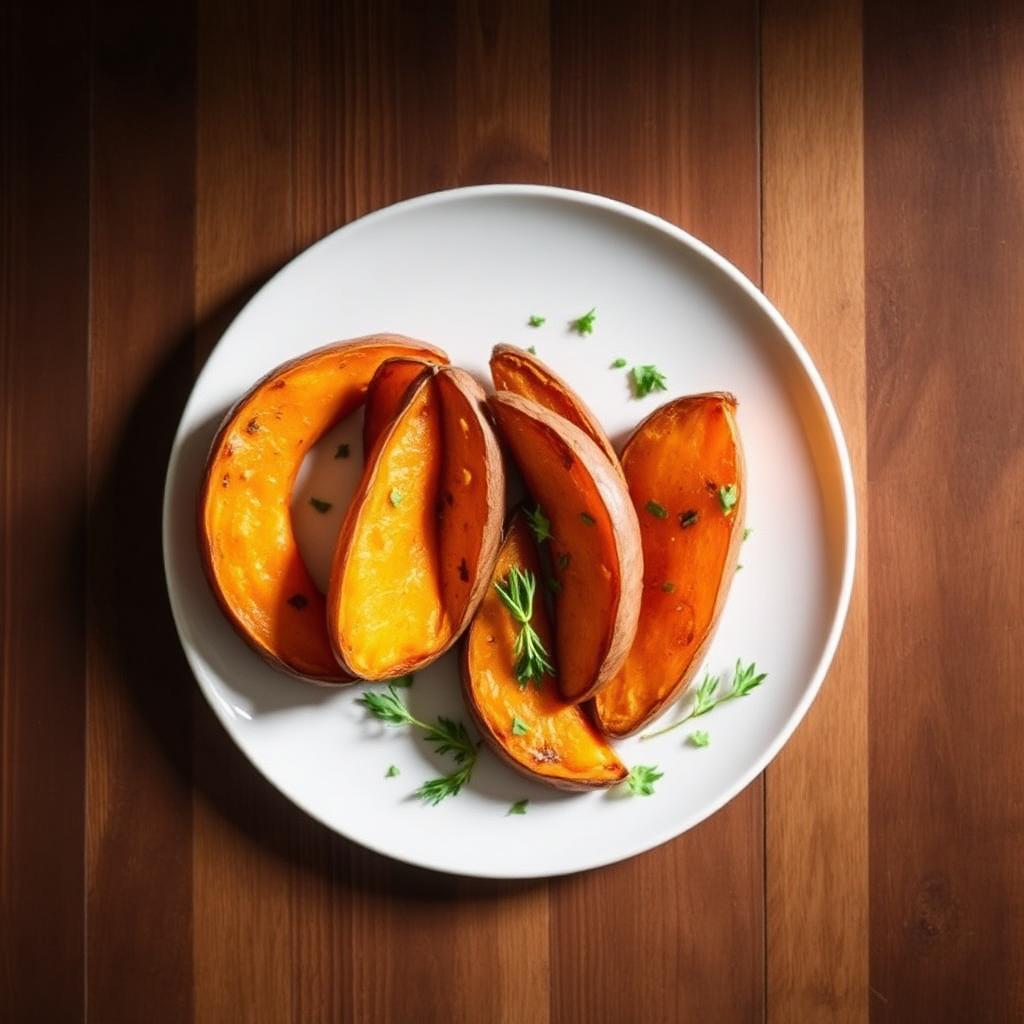
Is Sweet Potato Low FODMAP?
Short answer: Yes, sweet potato is low FODMAP up to about 1/2 cup (75 g) cooked. Bigger portions become high in mannitol, a polyol that can trigger IBS symptoms. If you want a larger serve, mix it with regular potato, which is low FODMAP in generous amounts.
Based on publicly available FODMAP research and intended for educational purposes. Individual tolerance and serving size can vary.
Monash Portion Guide
| Portion | Rating | Notes |
|---|---|---|
| 1/2 cup (75 g) cooked | ✅ Low FODMAP | Safe serve |
| 3/4 cup (100 g) | ⚠️ Moderate | Mannitol rising |
| 1 cup (150 g)+ | 🚫 High FODMAP | Excess mannitol |
Source: Monash University FODMAP App.
Sweet Potato vs Regular Potato
White potatoes are low FODMAP in unlimited serves — a safer choice if you want a bigger portion. See our full guide: Are Potatoes Low FODMAP?.
Best Ways to Eat Sweet Potato on Low FODMAP
- Roast wedges tossed in garlic-infused olive oil, salt, and paprika.
- Add 75 g cubes to a grain bowl with quinoa and grilled chicken.
- Mash with lactose-free butter and chives (green tops only).
- Blend into a low FODMAP soup — pair with our Recipe Converter to check other ingredients.
FAQ
Is sweet potato skin low FODMAP? Yes — the skin does not increase FODMAP levels; wash well before cooking.
What about sweet potato fries? Same 75 g limit applies — measure cooked weight.
This article is for informational purposes only and is not medical advice. Always consult a FODMAP-trained dietitian for personalised guidance.
Why This Matters for IBS Sufferers
Understanding the nuanced FODMAP content of foods like sweet potato is crucial for individuals managing Irritable Bowel Syndrome (IBS). The FODMAP elimination and reintroduction phases are designed to identify personal triggers. Mannitol, the specific FODMAP present in higher amounts in sweet potato, is a polyol that can cause significant digestive distress in sensitive individuals.
When mannitol reaches the large intestine, it is poorly absorbed. This draws water into the bowel through osmosis, leading to symptoms such as bloating, abdominal pain, and diarrhea. Additionally, gut bacteria ferment mannitol, producing gas that can exacerbate bloating and discomfort. For someone with IBS, even a small amount over their personal tolerance can trigger a cascade of symptoms that impact their quality of life.
The 75g low-FODMAP threshold for sweet potato isn't arbitrary; it's based on extensive testing by Monash University. Exceeding this limit, even by seemingly small amounts (e.g., 100g, where mannitol levels are moderate), can be enough to push some people over their symptomatic threshold. This highlights the importance of precise portion control during the elimination phase and careful monitoring during reintroduction. Without this awareness, individuals might mistakenly attribute symptoms to other foods or generalize sweet potato as generally "bad" for their gut, leading to unnecessary dietary restrictions.
Common Mistakes to Avoid
Navigating the low-FODMAP diet can feel like a minefield of hidden triggers. With sweet potato, several common pitfalls can lead to accidental FODMAP stacking or exceeding safe limits:
- "Eyeballing" portions: Without a food scale, it's easy to overestimate what 75g looks like. A half-cup cooked can vary significantly based on how finely it's mashed or diced. Always measure carefully, especially during the elimination phase.
- Assuming all sweet potatoes are equal: While most varieties fall under the same guidelines, the key is the quantity of mannitol, not the variety itself. Stick to the 75g rule regardless of whether it's orange, purple, or white-fleshed sweet potato.
- Forgetting about mixed dishes: Sweet potato in stews, curries, or casseroles can be problematic if you don't calculate your individual serving size. If a recipe calls for 500g of sweet potato for 4 servings, ensure your portion (125g) is shared proportionately across all other low-FODMAP ingredients to avoid going over the 75g limit for the sweet potato component itself.
- Confusing sweet potato with regular potato: As noted, regular white potatoes are much more tolerant. Mistaking one for the other and thinking you can have unlimited sweet potato chips, for example, will likely lead to symptoms.
- Ingredient lists with unspecified amounts: Prepared snacks, baked goods, or "health" foods often contain sweet potato puree or flour. Unless a product is certified low-FODMAP, assume it contains high-FODMAP levels of sweet potato if it's high on the ingredient list, or if you consume a large amount.
- Ignoring other FODMAPs in a meal: Even if your sweet potato portion is 75g, pairing it with other moderate-FODMAP foods (e.g., a slightly larger portion of broccoli or a small amount of avocado) can lead to "FODMAP stacking," where the cumulative effect of multiple small amounts of different FODMAPs triggers symptoms.
Meal Stacking & Portion Combinations
The low-FODMAP diet isn't just about individual food portions; it's about the total FODMAP load of a meal. "Meal stacking" refers to combining several low-FODMAP foods, each within its safest limit, to create a satisfying and symptom-free meal.
Here's how to incorporate sweet potato thoughtfully into your low-FODMAP meals:
- The "One Moderate-FODMAP Per Meal" Rule: If you are sensitive to mannitol, it's generally best to avoid combining the 75g sweet potato (which is often moderate in mannitol for some, even at its low-FODMAP threshold, if very sensitive) with other foods that are moderate in other polyols (like avocado in larger amounts, or certain mushrooms). This principle prevents accidental stacking.
- Pair with "Green Light" Foods: Focus on combining your 75g sweet potato with foods that are unequivocally low-FODMAP in larger portions.
- Proteins: Chicken, turkey, beef, fish, eggs, firm tofu (170g), tempeh (100g).
- Grains: Cooked quinoa (1 cup), rice (1 cup), gluten-free pasta, gluten-free bread.
- Vegetables: Bell peppers, carrots, cucumber, green beans (75g), kale, spinach, zucchini.
- Fats: Garlic-infused oil, olive oil, lactose-free butter.
Example Low-FODMAP Meal Combinations:
| Meal Component A (75g Sweet Potato) | Meal Component B (Protein) | Meal Component C (Other Veggies/Grains) | Outcome |
|---|---|---|---|
| Roasted sweet potato wedges | Grilled salmon | Steamed green beans (75g) & rocket | ✅ Low FODMAP, balanced meal |
| Mashed sweet potato (with LF butter) | Baked chicken breast | Sautéed spinach & bell peppers | ✅ Low FODMAP, comforting |
| Sweet potato cubes in curry | Extra firm tofu (170g) | Coconut rice (1 cup cooked) | ✅ Low FODMAP, flavorful |
| Roasted sweet potato & parsnip | Lean ground beef patty | Large salad with various low-FODMAP veggies | ✅ Low FODMAP, filling |
Remember that your personal tolerance may vary. During the reintroduction phase, you might find you can tolerate slightly more sweet potato or combine it with small amounts of other moderate-FODMAP foods.
Cooking, Prep & Storage Tips
Maximizing the flavor and convenience of sweet potato while adhering to low-FODMAP guidelines requires a few simple tips:
- Portioning Before Cooking: The easiest way to ensure accuracy is to weigh your sweet potato before peeling and cooking. If cutting into cubes or wedges, pre-weigh the desired amount (e.g., 75g raw) to ensure proper portioning once it's cooked and possibly shrinks slightly.
- Flavor Boosters: Since garlic and onion are high-FODMAP, rely on other flavorful ingredients:
- Herbs: Rosemary, thyme, sage, cilantro, parsley, chives (green tops only).
- Spices: Smoked paprika, cumin, coriander, turmeric, chili powder (check for garlic/onion content), cinnamon, nutmeg.
- Fats: Garlic-infused olive oil (the FODMAPs are not oil-soluble), chili-infused oil.
- Acids: Lemon juice, lime juice, apple cider vinegar (in small amounts) can brighten flavors.
- Roasting: This method brings out sweet potato's natural sweetness and creates a lovely caramelized texture. Toss cubed or wedge sweet potato (within 75g portion) with garlic-infused oil, salt, and your favorite low-FODMAP spices. Roast at 400°F (200°C) until tender and lightly browned.
- Steaming/Boiling: For mashing or blending into soups, steaming or boiling are efficient methods. Ensure sweet potato is tender but not waterlogged.
- Mashing: For a creamy mash, use lactose-free milk or dairy-free alternatives (e.g., almond milk - check for carrageenan), lactose-free butter, and chives (green tops only).
- Meal Prep: Cook a larger batch of 75g portions and store them individually. Once cooked, sweet potato can be stored in an airtight container in the refrigerator for 3-4 days. This makes it easy to grab a pre-portioned side for meals throughout the week without needing to re-measure.
- Freezing: Cooked and cooled sweet potato (cubes, mash) can be frozen for up to 3 months. Portion into individual 75g servings before freezing for easy defrosting and use in future meals. Thaw in the refrigerator overnight or gently reheat from frozen.