
Disclaimer: The information provided in this guide is for educational purposes only and should not replace professional medical advice. Always consult with a qualified healthcare professional, such as a registered dietitian specializing in digestive health, before making any dietary changes, especially if you have a medical condition like IBS. This guide references Monash University research, the gold standard in FODMAP science, but individual tolerances may vary. Our aim is to empower you with knowledge, not to provide medical treatment.
FODMAP Stacking Guide: Master Your Triggers for Gut Relief
Are you diligently following a low FODMAP diet, meticulously checking labels, only to find yourself still experiencing uncomfortable symptoms like bloating, gas, and abdominal pain? If this sounds familiar, you're not alone. Many individuals on the low FODMAP journey encounter a hidden culprit often overlooked: FODMAP stacking. This elusive phenomenon is, arguably, the number one hidden trigger for persistent IBS symptoms, even when you believe you're adhering perfectly to the diet guidelines. It’s a subtle yet powerful mechanism where seemingly safe, low-FODMAP foods can combine their small amounts of fermentable carbohydrates to create a cumulative effect that crosses your personal symptom threshold.
Imagine filling a bucket with water. Each low FODMAP food you consume is like adding a small, acceptable amount of water to that bucket. Individually, each addition is fine. But if you keep adding these small amounts from different sources throughout a meal or even over a short period, suddenly your bucket overflows – and that overflow translates directly into digestive distress. Understanding and mastering the art of navigating FODMAP stacking is a game-changer for long-term symptom management and improving your quality of life. This comprehensive FODMAP stacking guide will equip you with the knowledge and practical strategies to identify, prevent, and conquer this common challenge, transforming your relationship with food and your gut health. We’ll delve into the science, explore real-world scenarios, and provide actionable tips, leveraging cutting-edge tools to help you succeed.
What Exactly is FODMAP Stacking?
FODMAP stacking refers to the cumulative effect of ingesting multiple low FODMAP-serving sizes of different fermentable carbohydrates within a short timeframe, typically a single meal or across a few hours. While each individual food item might contain a level of FODMAPs considered "green" (low) by Monash University FODMAP Program guidelines, the combined total of these small amounts can become high enough to trigger symptoms in sensitive individuals. It's a critical concept to grasp for anyone managing IBS. Let's break down the scientific explanation.
FODMAPs (Fermentable Oligosaccharides, Disaccharides, Monosaccharides, and Polyols) are short-chain carbohydrates that are poorly absorbed in the small intestine. When they reach the large intestine, they are fermented by gut bacteria, producing gas, and drawing water into the bowel, leading to symptoms like bloating, pain, and altered bowel habits. Monash University has meticulously tested thousands of foods and assigned traffic light ratings (green, amber, red) based on their FODMAP content per standard serving size. A "green" food is considered safe because its FODMAP content is below the typical symptom threshold.
However, the crucial point often missed is that these thresholds apply per specific FODMAP type and per serving. For example, a small serving of broccoli (fructans) might be green, and a small serving of bell pepper (fructans) might also be green. Enjoying both in the same meal, especially if other fructan-containing items are present, can push your overall fructan intake above your personal tolerance level. Similarly, you could combine a green serving of lactose (disaccharide), a green serving of fructans (oligosaccharide), and a green serving of sorbitol (polyol) in one meal. While each is low individually, the total FODMAP load across different categories could still be sufficient to cause distress. This cumulative effect is the essence of FODMAP stacking.
How FODMAP Stacking Works: The Cumulative Effect and Threshold Concept
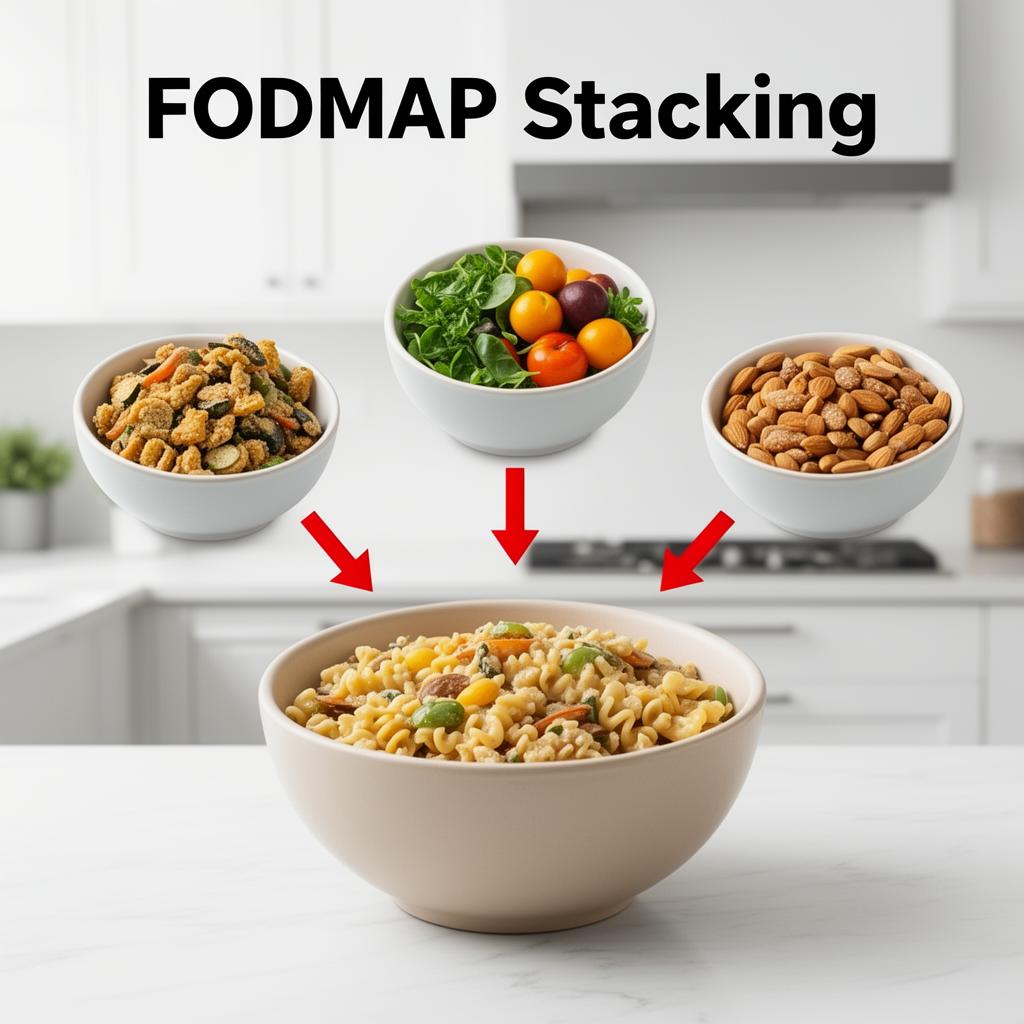
To truly master your gut health, understanding the mechanics of how FODMAP stacking works is paramount. It boils down to two key principles: the cumulative effect and your individual symptom threshold. Think of it like this: your gut has a "FODMAP tolerance bucket." Everyone's bucket size is different, and it can even fluctuate based on stress, sleep, and other factors. When you consume FODMAPs, you're filling that bucket.
Each FODMAP category (fructans, GOS, lactose, fructose in excess of glucose, and polyols like sorbitol and mannitol) contributes to this bucket. While some people are primarily sensitive to one FODMAP type, many react to a total load across multiple types. Monash University's research emphasizes that when you eat multiple foods that are "green" for a specific FODMAP in a single meal, or across a short period, those small amounts add up. For instance, if you have a meal with a small amount of onion (fructans) in your sauce, a small amount of bell pepper (fructans) in your stir-fry, and a small amount of almonds (fructans) as a topping, the combined fructan load could exceed your personal tolerance, even though each ingredient individually was consumed within its "green" serving size. This is the cumulative effect in action.
Moreover, the concept of a symptom threshold is crucial. This is the maximum amount of FODMAPs your gut can handle before symptoms appear. This threshold is highly individualized. What might cause severe symptoms in one person might be perfectly tolerable for another. Factors influencing your personal threshold include the severity of your IBS, gut motility, gut microbiome composition, and even psychological stress. The low FODMAP diet generally aims to keep your total FODMAP intake significantly below these typical thresholds. However, FODMAP stacking easily pushes you over the edge. By combining several low-FODMAP foods, you rapidly fill your bucket, pushing past your personal threshold, even when each item appears "safe." This is why a meticulous approach to meal planning and portion control, often supported by tools like our FODMAP Score Estimator and Portion Calculator, is essential to prevent this hidden build-up.
Common FODMAP Stacking Scenarios to Watch Out For
Identifying FODMAP stacking before it causes discomfort requires vigilance, especially when combining several ingredients in complex meals. Here are some common FODMAP stacking scenarios that frequently trip up individuals on a low FODMAP diet, paired with practical tips for navigating them:
1. The "Healthy" Smoothie Trap
Many low FODMAP fruits and vegetables, while green in small servings, contain fructans or excess fructose. A smoothie often combines several of these. Consider a smoothie with a small banana (fructans/fructose), a handful of spinach (fructans), and a few berries (fructose/polyols). Individually, these servings might be fine, but blended together, their FODMAP load can quickly accumulate. This is especially true for Breakfast Recipes where combining multiple fruit and vegetable sources is common. Always use your Ingredient Swap Finder to ensure your smoothie ingredients are compatible.
2. The Restaurant Meal Challenge
Eating out poses a significant FODMAP stacking risk. Even when requesting modifications, hidden ingredients can contribute. For example, a "plain" grilled chicken might be marinated in garlic powder (fructans), served with a side of safe-looking steamed green beans (sorbitol/fructans in larger amounts), and a small portion of rice. The cumulative effect of these seemingly small amounts can be potent. Our Restaurant Order Helper can assist in navigating these tricky situations.
3. The "Low FODMAP" Prepared Meal Paradox
Many commercially available "low FODMAP" products are designed to meet individual serving guidelines, but pairing multiple such products can still lead to stacking. A low FODMAP pasta sauce (contains some GOS/fructans) over low FODMAP pasta (contains some fructans), combined with a side salad dressing (could have polyols/fructans), might push you over the edge. Always check the full nutritional panel or use a FODMAP Food Checker Tool diligently, and remember your Recipe Converter for homemade options.
4. Snacking Throughout the Day
Frequent snacking can also contribute to FODMAP stacking, even if each snack is individually low FODMAP. For instance, having a small handful of almonds (fructans) in the morning, a rice cracker with a spread (fructans/GOS) in the afternoon, and a few grapes (fructose) before dinner rapidly adds up. When planning your Snack Recipes, consider the FODMAPs present across your entire day.
5. Complex Dinner Recipes
Many Dinner Recipes involve multiple ingredients. A stir-fry with small amounts of green beans (fructans/sorbitol), bell peppers (fructans), and a sauce containing garlic/onion powder (fructans/GOS) can be a major stacking culprit. Using strategies detailed in our IBS-Friendly Recipes can help mitigate this.
By being aware of these common scenarios, you can proactively adjust your eating patterns and minimize the risk of FODMAP stacking, leading to greater comfort and control over your IBS symptoms.
How to Prevent FODMAP Stacking: Practical Strategies for Relief
Preventing FODMAP stacking is key to sustained symptom relief on the low FODMAP diet. It requires a thoughtful approach to meal planning and portion control. Here are practical strategies to help you avoid this common pitfall:
1. Master Portion Control (The Cornerstone of Prevention)
This is perhaps the most crucial strategy. Even "green light" foods have an upper limit for their low FODMAP serving size. Exceeding this for even one ingredient can contribute to stacking. Always refer to current Monash University guidelines for specific portion sizes. Utilize our Portion Calculator to accurately measure and manage your intake, especially for foods with amber or red light warnings at larger servings. Remember, a portion of broccoli is considered low FODMAP at a specific weight, but doubling that portion can make it high FODMAP.
2. Focus on One FODMAP Type Per Meal (Where Possible)
Whenever feasible, try to limit the number of different FODMAP categories you include in a single meal. For instance, if you're having something with a small amount of fructans, try to avoid other fructan-containing foods or foods high in other FODMAPs. This simplifies the FODMAP load and reduces the chances of reaching your threshold. Our FODMAP Diet Guides offer further insights into category management.
3. Use the Monash University App Diligently
The Monash University FODMAP Diet App is the authoritative source for FODMAP content. It's not just about green/amber/red lights; it provides specific FODMAP types and concentrations. Always consult it for any food you're unsure about, and pay attention to what specific FODMAPs are present even in "green" servings. This nuanced understanding is vital for preventing stacking.
4. Spread Out FODMAPs Throughout the Day
Instead of concentrating several low FODMAP servings of similar FODMAPs into one large meal, try to distribute them across the day. For example, if you want to enjoy a handful of almonds (fructans), perhaps have them as a morning snack and avoid other fructan-containing foods until dinner. Our Symptom Tracker can help you identify patterns related to meal timing.
5. Prioritize "Negligible" FODMAP Foods
Some foods, like rice, quinoa, and certain meats, contain virtually no FODMAPs. Build your meals around these naturally FODMAP-free staples. This leaves more "room in your bucket" for low FODMAP ingredients that do contain some fermentable carbohydrates. When planning Low FODMAP Recipes, always consider a base of negligible FODMAP ingredients.
6. Keep a Food and Symptom Diary
This classic method remains incredibly powerful. Document what you eat, including portion sizes, and any symptoms experienced. This helps you identify personal stacking triggers and your unique threshold. Our integrated Symptom Tracker can streamline this process, allowing you to quickly see correlations.
7. Leverage Digital Tools for Meal Planning
Modern technology offers immense support. Tools like our FODMAP Food Checker Tool and Grocery List Builder can help you select appropriate ingredients and plan meals that minimize stacking risks. For those interested in estimating their overall FODMAP load, our FODMAP Score Estimator can provide valuable insights.
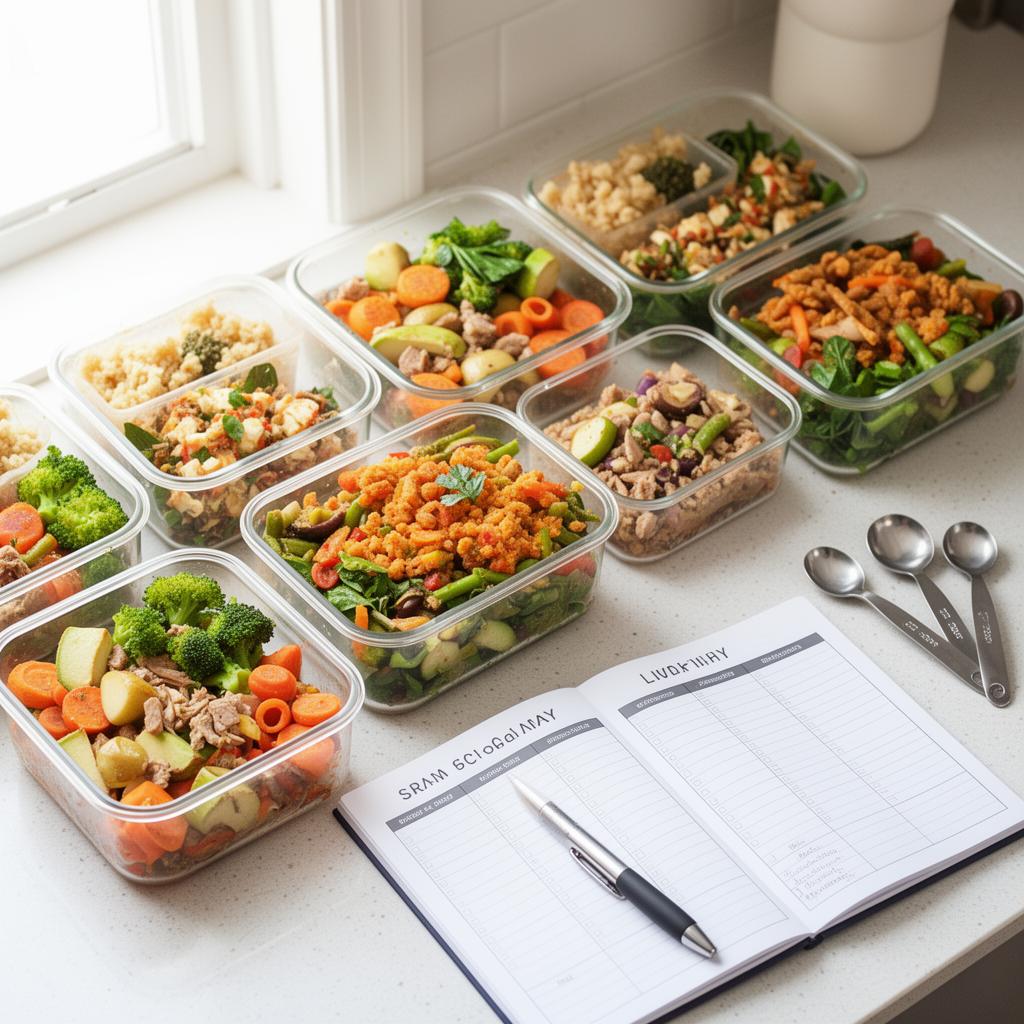
By implementing these strategies, you can gain greater control over your symptoms and enjoy a wider variety of foods without fear of FODMAP stacking.
Sample FODMAP Stacking Meal Plan: A Day of Careful Choices
Crafting a low FODMAP meal plan that avoids stacking requires mindful selection of ingredients and precise portion control. Here’s a sample day designed to demonstrate how you can enjoy delicious meals without overloading your gut, using many of the principles of a careful FODMAP stacking strategy:
Breakfast (8:00 AM): Vanilla & Berry Chia Pudding
- 1/4 cup chia seeds (negligible FODMAP)
- 1 cup lactose-free milk (lactose-free)
- 1/2 teaspoon vanilla extract (negligible FODMAP)
- 1/4 cup mixed blueberries (negligible FODMAP) and raspberries (fructose – well within low FODMAP serving)
- Why it works: Minimal FODMAPs, primarily healthy fats and fiber for satiety. Blueberries and raspberries are low in fructose at these portions.
- Resource Check: See our Breakfast Recipes for more ideas.
Morning Snack (10:30 AM): Rice Cakes with Peanut Butter
- 2 plain rice cakes (negligible FODMAP)
- 2 tablespoons natural peanut butter (low FODMAP in this serving size; watch for GOS in larger amounts)
- Why it works: Simple, low-FODMAP snack. Peanut butter is safe in moderate portions. Always check your FODMAP Food Checker Tool for brand specifics.
Lunch (1:00 PM): Chicken & Quinoa Salad
- 4 oz grilled chicken breast (negligible FODMAP)
- 1 cup cooked quinoa (negligible FODMAP)
- 1/2 cup cucumber, diced (negligible FODMAP)
- 1/4 cup carrots, shredded (negligible FODMAP)
- 2 tablespoons olive oil and lemon juice dressing (negligible FODMAP)
- Why it works: Built on a base of negligible FODMAP ingredients. All vegetables are within "green" limits.
- Resource Check: Explore our Low FODMAP Recipes for more lunch inspirations.
Afternoon Snack (3:30 PM): Hard-boiled Egg
- 1 large hard-boiled egg (negligible FODMAP)
- Why it works: Easy, protein-rich, and completely FODMAP-free.
Dinner (6:30 PM): Salmon with Roasted Potatoes & Asparagus Tips
- 5 oz baked salmon fillet (negligible FODMAP)
- 1 medium potato, roasted (negligible FODMAP)
- 1/4 cup asparagus tips (fructans – carefully portioned green serving)
- Why it works: While asparagus contains fructans, 1/4 cup of tips is an acceptable green serving size. Combining it with negligible FODMAPs prevents stacking.
- Resource Check: Find more Dinner Recipes that prioritize low FODMAP ingredients.
Evening Dessert (8:00 PM): Small serving of Lactose-Free Yogurt
- 1/2 cup plain, lactose-free yogurt (lactose-free)
- Why it works: Enjoyable and dairy-free for those sensitive to lactose.
This day's plan carefully manages FODMAP intake across meals, primarily relying on negligible FODMAP foods and strategically incorporating minimal amounts of foods with green-light portions. Using a Grocery List Builder will help you prepare for such a plan.
Common Mistakes to Avoid When Managing FODMAP Stacking
Even with the best intentions, it's easy to make mistakes that lead to FODMAP stacking. Being aware of these common pitfalls can significantly improve your success in managing symptoms. Here are 6-7 common mistakes to actively avoid:
Over-relying on "Green Light" without Considering Quantity: Just because a food is green on the Monash app doesn't mean you can eat unlimited amounts. Many green foods have a clear portion size listed. Eating double or triple that portion can quickly turn a low FODMAP food into a high FODMAP one. Always pay attention to the "per serving" information.
Ignoring Amber Light Servings: Amber-light foods signify that while a small serving is okay, a larger serving will be high in FODMAPs. Many people avoid amber foods altogether, which isn't necessary. However, including multiple amber-light servings (even if individually within their "safe" smaller portion) in a single meal or day is a direct path to stacking. Use them sparingly and mindfully.
Mixing Too Many Different FODMAP Categories: While not always avoidable, try to limit meals where you combine foods from multiple FODMAP categories (e.g., fructans, GOS, polyols, lactose, excess fructose). When you have a bit of GOS from chickpeas, a bit of fructans from bell pepper, and a touch of polyols from avocado in the same meal, these small amounts can quickly stack up. Our FODMAP Score Estimator can help visualize this.
Forgetting About Hidden FODMAPs: Processed foods, sauces, seasonings, and even some medications can contain hidden FODMAPs like inulin, onion powder, garlic powder, high-fructose corn syrup, or sugar alcohols. Always read ingredient labels meticulously. This is where a FODMAP Food Checker Tool is invaluable.
Snacking Without Planning: Grazing on multiple low-FODMAP snacks throughout the day, each containing small amounts of FODMAPs, can quickly accumulate. For example, having a handful of almonds (fructans), then a rice cracker with specific seeds (GOS), and later a few cashews (GOS) could easily lead to stacking. Plan your Snack Recipes carefully.
Not Tracking Symptoms (or Tracking Inadequately): Without a detailed Symptom Tracker that correlates food intake with symptoms, it's almost impossible to identify your personal stacking triggers. Many people abandon the diet prematurely because they don't understand why symptoms persist, often due to undetected stacking.
Neglecting Cross-Contamination: Even trace amounts of high-FODMAP ingredients can be problematic for highly sensitive individuals. Be particularly careful in restaurants or when sharing cooking spaces, using our Restaurant Order Helper for guidance.
By being vigilant about these common mistakes, you can significantly improve your ability to manage FODMAP stacking and achieve lasting relief from IBS symptoms. Understanding your body's unique response to composite FODMAP loads is key, as demonstrated by research published in the Journal of Gastroenterology and Hepatology on dietary management of IBS.
Frequently Asked Questions About FODMAP Stacking
Here are some of the most common questions individuals have about FODMAP stacking, providing detailed answers to clarify this complex aspect of the low FODMAP diet:
Q1: What's the difference between FODMAP stacking and eating a high-FODMAP food?
A1: Eating a high-FODMAP food means consuming a single food item that, even in its recommended serving size, contains a substantial amount of FODMAPs known to trigger symptoms. For example, eating a whole avocado (high in sorbitol) or a large head of broccoli (high in fructans). FODMAP stacking, conversely, is when you consume multiple low-FODMAP serving sizes of different foods, where each individually is "green," but their combined FODMAP content (often within the same FODMAP category or across several categories) in a short period becomes high enough to cause symptoms. It's about cumulative effect, not single-item overload, as detailed by Monash University FODMAP Program.
Q2: How long does FODMAP stacking take to cause symptoms?
A2: The onset of symptoms from FODMAP stacking can vary greatly among individuals, but it typically occurs within 2-24 hours after ingestion. This timeframe aligns with the rate at which FODMAPs ferment in the large intestine. Many people report symptoms within a few hours, especially for meals with a higher FODMAP load. Keeping a Symptom Tracker is crucial for identifying your personal timing.
Q3: Does FODMAP stacking apply to all FODMAP types equally?
A3: While stacking can occur with all FODMAP types, sensitivity levels vary. Some individuals might be highly sensitive to fructan stacking, while others might react more to polyol stacking. The Monash app helps by often detailing which specific FODMAPs are present. A meal rich in fructans from a few different "green" sources is a classic stacking scenario. Using our FODMAP Score Estimator can help you understand your overall intake across categories.
Q4: Can I build up a tolerance to FODMAP stacking over time?
A4: While your overall FODMAP tolerance can improve as your gut heals and during the reintroduction phase, actively training your gut to tolerate stacking isn't the goal. The low FODMAP diet aims to find your personal threshold. During reintroduction, you test individual FODMAPs to determine your tolerance. Once you understand your specific triggers and thresholds, you can strategically incorporate more variety without causing stacking, guided by your reintroduction results. Consistent use of tools like our Fiber Tracker can also help manage overall gut health.
Q5: Is there a tool to help me calculate my FODMAP stacking risk for a meal?
A5: Yes, while no tool can perfectly predict individual reactions, our FODMAP Score Estimator is designed to give you an approximation of the overall FODMAP load of a meal based on ingredients and their typical FODMAP content, helping you proactively identify potential stacking risks. Additionally, using the Monash University FODMAP Diet App in conjunction with our Recipe Converter allows for detailed ingredient analysis.
Q6: How does fiber intake relate to FODMAP stacking?
A6: Fiber is essential for gut health, but not all fiber is created equal. Some high-FODMAP foods are also high in fiber. When managing FODMAP stacking, it's crucial to distinguish between fermentable (FODMAP) fiber and non-fermentable fiber. Focusing on low-FODMAP fiber sources (like quinoa, oats, specific vegetables) is important. High fiber intake from multiple low-FODMAP sources can still ferment and cause symptoms in some individuals if the total FODMAP load is too high. Our Fiber Tracker can help ensure you're getting adequate, gentle fiber without contributing to stacking. For more general guidelines, the NIDDK provides helpful information on IBS and diet.
Q7: If I'm strict and still have symptoms, could it be FODMAP stacking?
A7: Absolutely. FODMAP stacking is one of the most common reasons individuals follow the diet strictly but continue to experience symptoms. It's often the "missing piece" in their symptom management puzzle. If you're confident in your knowledge of individual low-FODMAP foods but still suffer, a deeper dive into your typical meal combinations and portion sizes, perhaps with the help of a dietitian and using our Symptom Tracker, is highly recommended to uncover stacking culprits. The IBS Network also offers further support and resources for persistent symptoms: The IBS Network.
Conclusion: Empower Your Gut Health by Conquering FODMAP Stacking
Navigating the low FODMAP diet can feel like a complex puzzle, but understanding and actively preventing FODMAP stacking is the ultimate key to unlocking consistent digestive comfort. We've explored how the cumulative effect of small, seemingly innocent amounts of FODMAPs can lead to significant overlap and trigger uncomfortable IBS symptoms, even when following guidelines diligently. From debunking common myths to providing actionable strategies, this comprehensive FODMAP stacking guide has equipped you with the knowledge to identify, mitigate, and ultimately conquer this hidden challenge.
By mastering portion control, thoughtfully combining ingredients in your Low FODMAP Recipes, utilizing the invaluable Monash University FODMAP Program resources, and leveraging powerful digital tools like our FODMAP Food Checker Tool and Symptom Tracker, you can move beyond uncertainty. Take control of your gut health, transform your meal planning, and experience the sustained relief you deserve. Don't let FODMAP stacking hold you back any longer. Start implementing these strategies today and embark on a path to a more comfortable and predictable digestive journey. Your gut will thank you!
Sources & References
- Monash University FODMAP Program: The leading authority on FODMAP research and dietary guidelines. Their app is an essential tool for anyone on the low FODMAP diet. https://www.monashfodmap.com/
- NIDDK (National Institute of Diabetes and Digestive and Kidney Diseases): Provides reliable health information on digestive diseases like Irritable Bowel Syndrome. https://www.niddk.nih.gov/health-information/digestive-diseases/irritable-bowel-syndrome
- Journal of Gastroenterology and Hepatology: A peer-reviewed medical journal publishing research on digestive health, including studies relevant to IBS and dietary interventions. https://onlinelibrary.wiley.com/journal/14401746
- The IBS Network: A charity dedicated to providing information, advice, and support to people with IBS. https://www.theibsnetwork.org/