
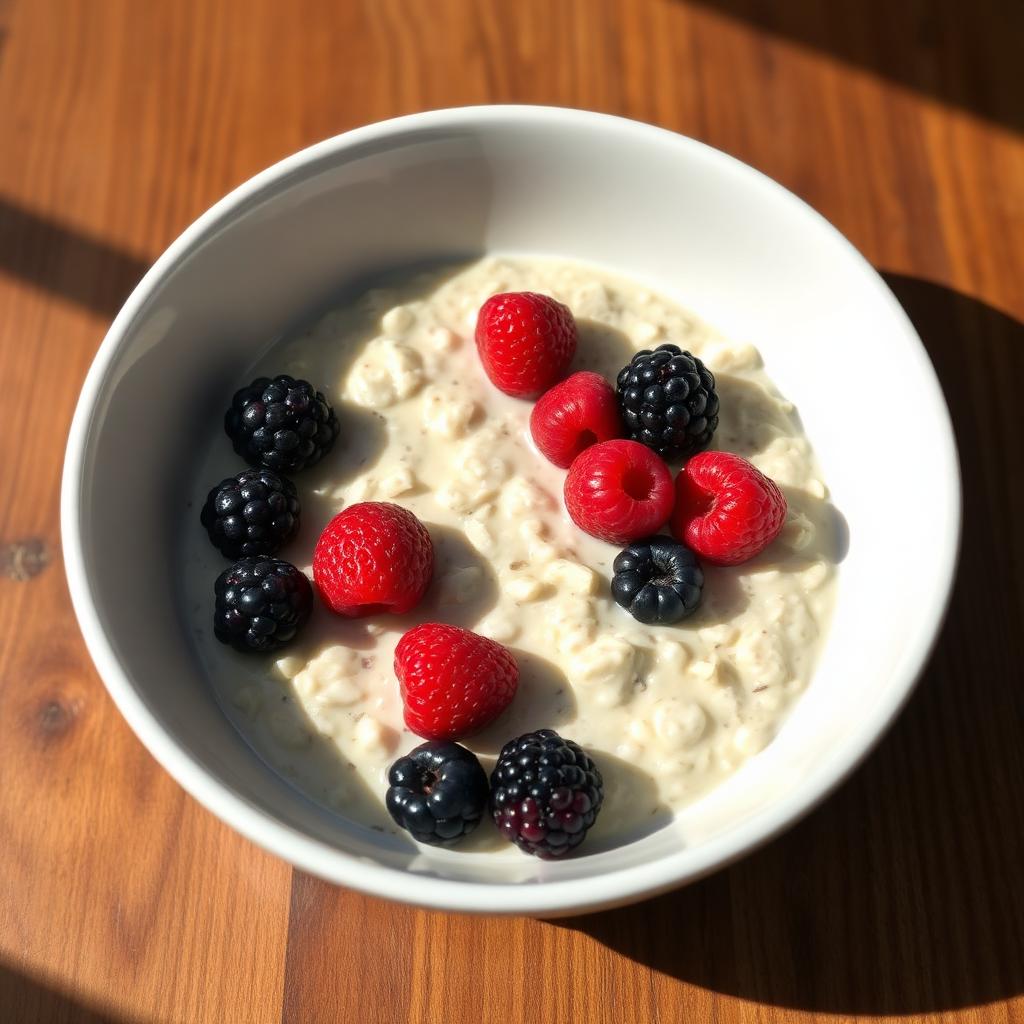
Short answer: Yes — rolled oats are low FODMAP at ½ cup dry (52 g) per serve per Monash. Above 1 cup dry, fructans/GOS climb into moderate range.
Key Takeaways
- Rolled oats: ½ cup dry (52 g) safe serve 🟢
- Quick oats: ¼ cup dry (23 g) safe 🟢
- Steel-cut: ¼ cup dry (45 g) safe 🟢
- Instant flavored packets: usually 🔴 (honey, apple, dried fruit)
Monash Portion Chart
| Type | Safe Serve (Dry) | Status |
|---|---|---|
| Rolled oats | ½ cup / 52 g | 🟢 Low |
| Quick oats | ¼ cup / 23 g | 🟢 Low |
| Steel-cut oats | ¼ cup / 45 g | 🟢 Low |
| Oat bran | 2 tbsp | 🟢 Low |
| Instant flavored | Varies | 🔴 Check label |
Best Toppings
- 28 g blueberries (see Are Blueberries Low FODMAP?)
- 2 tbsp peanut butter (see Is Peanut Butter Low FODMAP?)
- 1 tsp maple syrup or brown sugar
- Cinnamon (unlimited)
- Firm banana (⅓ medium)
Recipes
FAQs
1. Are oats gluten-free? Naturally yes, but choose certified GF oats to avoid cross-contamination.
2. Is oat milk low FODMAP? 125 ml (½ cup) max per Monash.
3. Are overnight oats low FODMAP? Yes at ½ cup dry rolled oats with lactose-free milk.
Sources: Monash University, Kate Scarlata RDN
Informational only — not medical advice.
Why This Matters for IBS Sufferers
For individuals managing Irritable Bowel Syndrome (IBS), understanding the FODMAP content of staple foods like oatmeal is crucial for symptom management. Oats, particularly rolled oats, are a fantastic source of soluble fiber, which can be incredibly beneficial for regulating bowel movements – often a primary concern for those with IBS-C (constipation-predominant) or IBS-D (diarrhea-predominant). Soluble fiber helps to bulk up stool, making it easier to pass with IBS-C, and can absorb excess water to firm up stool for IBS-D.
However, the "safe" dosage of oats is paramount. Exceeding the recommended low-FODMAP serving sizes can quickly introduce problematic fructans and GOS (galactooligosaccharides), leading to uncomfortable symptoms such as bloating, gas, abdominal pain, and altered bowel habits. Since oats are often consumed as a breakfast staple or snack, misjudging portions can inadvertently trigger a flare-up, making it difficult to identify other dietary triggers. Learning to accurately measure and select the right type of oats allows IBS sufferers to enjoy a nutritious, satisfying, and gut-friendly meal without the fear of symptoms.
Common Mistakes to Avoid
Navigating the world of low-FODMAP oatmeal can be tricky. Here are some common pitfalls and how to steer clear:
- Over-Portioning: This is by far the most frequent mistake. A "standard" bowl of oatmeal for many can easily exceed the ½ cup dry (52g) limit for rolled oats. Always measure your dry oats accurately using a measuring cup or scale.
- Assuming All Oats Are Equal: As the chart illustrates, quick oats and steel-cut oats have different low-FODMAP serving sizes due to processing and density. Don't assume the ½ cup rule applies to all oat varieties.
- "Healthy" Yet High-FODMAP Toppings: While some fruit and nut butters are low-FODMAP, many popular oatmeal toppings are not. Dried fruits (raisins, dates, dried cranberries), large servings of certain fresh fruits (cherries, mango, large portions of berries), high-FODMAP nuts (cashews, pistachios), and honey are common culprits.
- Uncertified Gluten-Free Oats: While oats are naturally gluten-free, cross-contamination with wheat, barley, or rye during growing, harvesting, or processing is common. For those with celiac disease or gluten sensitivity in addition to IBS, always choose certified gluten-free (GF) oats.
- Instant Flavored Packets: These are almost universally high in FODMAPs. They often contain high-fructose corn syrup, dried fruit, artificial sweeteners like sorbitol or mannitol, honey, or large amounts of other high-FODMAP ingredients. Always read the ingredient list carefully, and it's generally safer to make your own from plain oats.
- High-FODMAP Milks: Using regular cow's milk (lactose), soy milk (unless made from soy protein isolate), or regular oat milk in excess can easily push your oatmeal into high-FODMAP territory. Stick to lactose-free milk, almond milk, or the low-FODMAP serving of oat milk (125ml).
Meal Stacking & Portion Combinations
The beauty of the low-FODMAP diet lies in combining safe portions to create a satisfying meal without exceeding individual FODMAP thresholds. Here's how to "stack" your oatmeal for maximum flavor and satiety within low-FODMAP limits:
| Component | Low-FODMAP Serve | Potential FODMAP Impact | Notes |
|---|---|---|---|
| Base: Rolled Oats | ½ cup dry (52g) | Fructans, GOS | Foundation of your meal. Be precise with measurement. |
| Liquid Base | 1 cup lactose-free milk | Lactose | Or up to 125ml Monash-certified oat milk (check ingredients). |
| Fruit (Low-FODMAP) | 28g blueberries | Fructans, Sorbitol | Or ⅓ medium firm banana, 1 cup sliced strawberries, small kiwi. |
| Nut/Seed Butter | 2 tbsp peanut butter (32g) | GOS, Fructans | Or 2 tbsp almond butter (32g), 2 tbsp sunflower seed butter (32g). |
| Sweetener | 1 tsp maple syrup | Fructose | Or brown sugar, rice malt syrup. |
| Spice | Unlimited cinnamon | None | Or ginger, cardamom. |
| Protein Boost | 1 scoop low-FODMAP protein powder | Varies, check label | Ensure no high-FODMAP sweeteners or ingredients. |
Example Low-FODMAP Oatmeal Bowl:
- ½ cup dry rolled oats
- ¾ - 1 cup lactose-free milk (enough to cook to desired consistency)
- 2 tbsp peanut butter
- 28g fresh blueberries
- 1 tsp maple syrup
- Dash of cinnamon
This combination stays well within low-FODMAP limits, providing a balanced and filling meal with fiber, protein, and healthy fats. Remember, the goal is not to eliminate all FODMAPs, but to keep individual and cumulative FODMAP loads below your personal symptom threshold.
Cooking, Prep & Storage Tips
Mastering low-FODMAP oatmeal isn't just about ingredients, but also how you prepare and store it.
- Accurate Measurement is Key: Always use measuring cups and ideally a food scale for dry oats. Eyeballing can lead to significant FODMAP overconsumption.
- Cooking Methods:
- Stovetop: Combine ½ cup dry rolled oats with 1 cup liquid (lactose-free milk or water). Bring to a boil, then reduce heat and simmer for 5-7 minutes, stirring occasionally, until liquid is absorbed and oats are creamy.
- Microwave: Combine ½ cup dry rolled oats with 1 cup liquid in a large microwave-safe bowl. Microwave on high for 2-3 minutes, stirring halfway, until cooked through. Be mindful of boil-overs.
- Overnight Oats: This is an excellent prep-ahead option. Combine ½ cup dry rolled oats with ¾ - 1 cup lactose-free milk (or a mix of milk and water, or low-FODMAP fruit juice like cranberry), and your chosen low-FODMAP toppings in a jar or container. Refrigerate overnight (at least 4 hours). The liquid softens the oats without cooking.
- Batch Prep: Cook a larger batch of plain rolled oats without high-FODMAP additions. Store in an airtight container in the refrigerator for up to 3-4 days. Reheat with a splash of lactose-free milk or water and add fresh low-FODMAP toppings each morning. This saves time and ensures consistent low-FODMAP portions.
- Flavoring Before Cooking: Add cinnamon, vanilla extract (ensure no high-FODMAP alcohol content if sensitive), or a tiny pinch of salt to the oats and liquid before cooking for a deeper flavor.
- Freezing Cooked Oats: Cooked plain oatmeal can be portioned into freezer-safe containers or silicone muffin molds. Once frozen, transfer to a freezer bag. Reheat in the microwave with a little extra liquid. This is great for an even quicker breakfast during busy weeks.
- GF Certification: If following a strict gluten-free diet, ensure your chosen oats are certified gluten-free to avoid accidental gluten exposure from cross-contamination in processing.
Testing Your Personal Tolerance (Reintroduction Guidance)
Once you've successfully completed the elimination phase of the low-FODMAP diet and are symptom-free, you'll want to reintroduce oats to determine your personal tolerance. This is a crucial step to achieve a more varied and less restrictive diet.
Phase 1: Controlled Challenge
- Choose one type of oat: Start with rolled oats, as they have the highest low-FODMAP threshold.
- Start with a small increase:
- Day 1: ½ cup dry (52g) cooked rolled oats – your established "safe" serve. Monitor symptoms.
- Day 2: If no symptoms, increase to ¾ cup dry (approx. 78g) cooked rolled oats. Wait 2-3 days and monitor for symptoms.
- Day 3: If still no symptoms, increase to 1 cup dry (approx. 104g) cooked rolled oats. Wait 2-3 days and monitor.
- Record Everything: Keep a detailed food and symptom journal. Note the amount consumed, timing, and any digestive reactions (bloating, gas, pain, stool changes).
- Observe for Symptoms: Pay attention to a return of your typical IBS symptoms. These might arise immediately or up to 24-48 hours later.
- Revert if Symptoms Occur: If symptoms appear at any given increase, that amount is likely above your personal tolerance for fructans/GOS from oats. Revert to the last symptom-free amount and consider that your threshold for this specific FODMAP in oats. Return to your low-FODMAP baseline diet for a few days until symptoms subside before trying another challenge.
Phase 2: Individual FODMAP Stacking
Once you've identified your tolerance level for fructans/GOS from oats, you can start combining it with other low-FODMAP foods. During the reintroduction phase, it's best to test one FODMAP group at a time. This controlled approach helps you isolate which FODMAPs, and at what amounts, trigger your symptoms, allowing you to build a personalized, sustainable diet.
Important Considerations:
- Patience is Key: This process takes time. Do not rush through reintroduction steps.
- Consult a Dietitian: Work with a registered dietitian specializing in FODMAPs. They can provide personalized guidance, especially if you have co-existing conditions or experience challenges.
- Listen to Your Body: Everyone's tolerance is unique. There is no "right" or "wrong" amount; only what works for your digestive system.
Related Low-FODMAP Alternatives
While oatmeal is a fantastic low-FODMAP option, variety is helpful. If you're looking for alternatives, especially for breakfast or if oats start to cause issues, consider these:
- Rice Flakes/Porridge: Rice is naturally gluten-free and very low in FODMAPs. Rice flakes can be cooked into a creamy porridge similar to oatmeal. Ensure it's plain rice, not flavored varieties.
- Quinoa Porridge: Quinoa (pronounced keen-wah) is a pseudo-grain that is inherently low-FODMAP. Cooked quinoa can be made into a savory or sweet breakfast porridge. Monash University lists quinoa as low FODMAP at 1 cup cooked (155g).
- Certified Gluten-Free Corn grits/Polenta: When made from plain cornmeal, these can be a hearty, low-FODMAP savory breakfast option. Ensure no high-FODMAP additives.
- Sorghum Flakes: Sorghum is a naturally gluten-free grain. Sorghum flakes can be cooked into a porridge similar to oats and are low-FODMAP.
- Buckwheat Porridge (Kasha): While buckwheat isn't a wheat product, it has a distinct flavor. Roasted buckwheat groats (kasha) can be cooked into a porridge. Monash lists 1 cup cooked buckwheat groats (155g) as low FODMAP.
- Low-FODMAP Granola/Cereal: Look for certified low-FODMAP granolas or cereals (e.g., puffed rice, corn flakes, unless they contain high-fructose corn syrup). Always check the ingredient list for hidden high-FODMAPs.
- Eggs: For a non-grain option, eggs are a versatile and protein-rich low-FODMAP food. Scrambled, omelets, or hard-boiled eggs with low-FODMAP vegetables can be a great breakfast.
- Lactose-Free Yogurt with Low-FODMAP Fruit: A quick and easy alternative, combine lactose-free plain yogurt with a serving of blueberries, strawberries, or firm banana.
When choosing alternatives, always double-check Monash University's FODMAP app for specific serving sizes and potential hidden FODMAPs, especially in processed products.
Expert Insights
The information presented here aligns with the robust research and guidance provided by leading experts in FODMAP science.
Monash University: As the pioneer in FODMAP research, Monash University's data forms the cornerstone of the low-FODMAP diet. Their testing of individual foods, including various oat types and their corresponding FODMAP content, is widely accepted as the gold standard. Their methodologies account for different processing techniques (rolled, quick, steel-cut) which impact FODMAP levels. Their app is regularly updated with the latest findings, including re-testing of certain foods or new food entries, which is why referring to the app for the most current data is always recommended. The specific gram amounts provided for "safe serves" are direct from Monash analysis, identifying the point at which FODMAPs (primarily fructans and GOS in oats) become detectable or rise to moderate/high levels.
Kate Scarlata RDN, MPH: A prominent and highly respected registered dietitian, Kate Scarlata is a leading authority on the low-FODMAP diet in the United States. She has been instrumental in translating complex FODMAP science into actionable advice for patients and practitioners. Her work emphasizes the practical application of Monash data, focusing on accurate portion control, understanding cumulative FODMAPs, and the importance of individual tolerance. Scarlata frequently highlights how common serving sizes of seemingly "healthy" foods can exceed low-FODMAP thresholds, advocating for careful measurement, particularly for foods like oats that are often consumed in larger quantities. Her insights often delve into the nuances of FODMAP content variability and the necessity of reintroduction to personalize the diet beyond the strict elimination phase.
These experts continually contribute to our understanding of how diet impacts IBS, making precise guidance on foods like oatmeal invaluable for effective symptom management. Their ongoing research and clinical experience underscore the importance of accurate information for those following a low-FODMAP approach.
Additional FAQs
1. Can I have oat flour on a low-FODMAP diet?
Plain oat flour, made from low-FODMAP rolled oats, should be consumed in similar portions to the dry oats themselves. Since it's a concentrated form, a smaller volume might contain the same amount of FODMAPs as ½ cup dry rolled oats. Monash hasn't specifically tested oat flour, so it's best to proceed with caution and potentially limit it to amounts equivalent to ¼ to ½ cup dry oats (by weight, if possible) if using it in baking.
2. Are oat groats low FODMAP?
Oat groats are the whole, minimally processed kernels of oats. Monash University has not specifically tested oat groats. Based on the data for other oat forms, they would likely contain similar fructan and GOS levels to rolled or steel-cut oats, meaning a moderate serving would be low FODMAP. For safety, treat them with caution and start with a smaller portion, such as ¼ cup dry, and monitor your symptoms.
3. What about oat bran? Is it different from oats?
Yes, oat bran is essentially the outer layer of the oat grain. Monash University has specifically tested oat bran and lists it as low FODMAP at 2 tablespoons (14g). While it is a good source of soluble fiber, it's a more concentrated form, so its low-FODMAP serving size is much smaller than for rolled oats.
4. Can I use oat fiber in baking while on low-FODMAP?
Oat fiber is an insoluble fiber derived from the oat hull and is highly processed, stripping away virtually all FODMAP content. It is generally considered low-FODMAP and can be used to add bulk and fiber to baking without contributing significant FODMAPs. However, ensure the product is 100% pure oat fiber with no added high-FODMAP ingredients.
5. Why are quick oats and steel-cut oats safe in smaller quantities than rolled oats?
This is typically due to the density and processing. Quick oats are cut finer and steamed longer, making them more compact per volume, so a smaller volume contains more oat material and thus more FODMAPs. Steel-cut oats are less processed, but also very dense. Rolled oats are larger and flatter, so ½ cup by volume contains less overall oat material (and fewer FODMAPs) than ½ cup of quick or steel-cut oats. The crucial factor is the total gram weight of the dry oat product. Always check the Monash app for the specific gram weight associated with the low-FODMAP serving.
This article is for informational purposes only and does not replace personalized advice from a registered dietitian or healthcare provider.