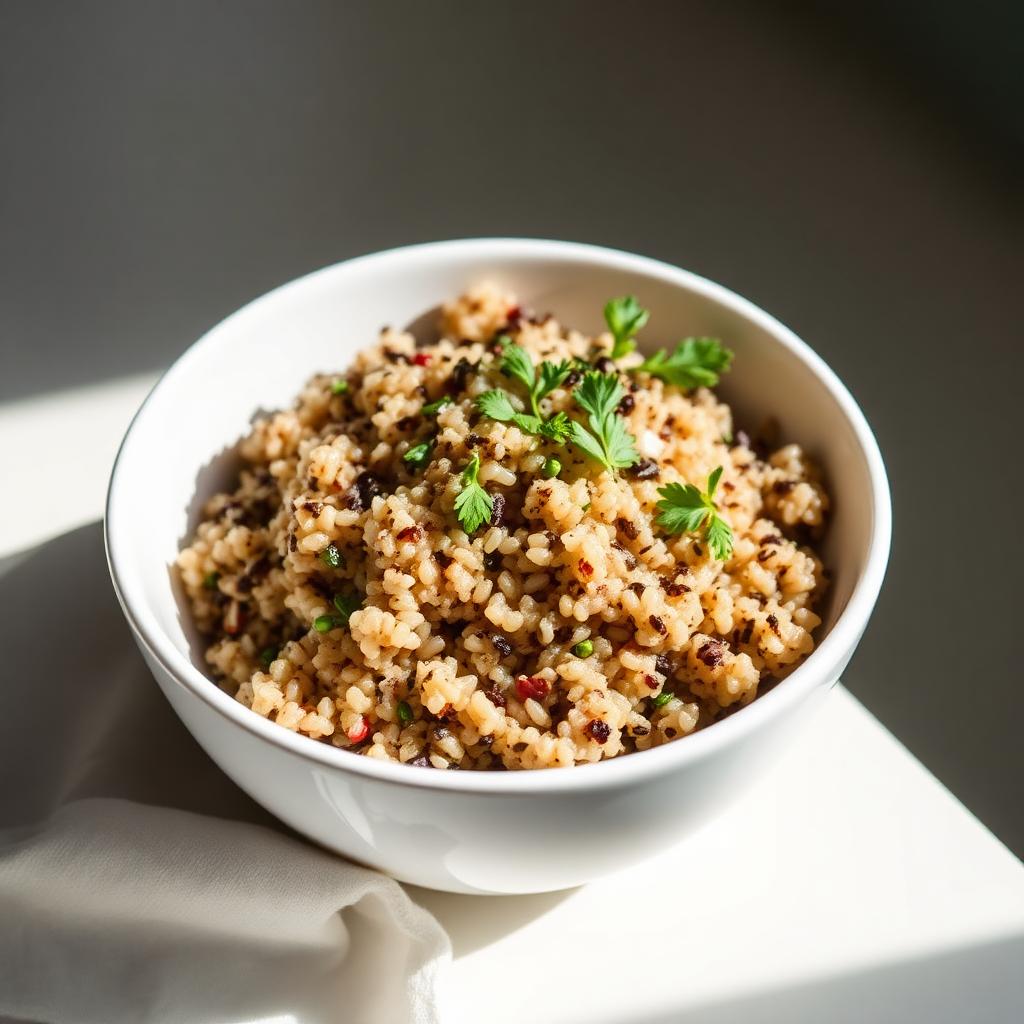
Short answer: Yes — quinoa is low FODMAP at a serving of 1 cup cooked (155 g), according to Monash University. It's one of the safest grains for the elimination phase because it's naturally gluten-free and does not contain fructans like wheat.
Quinoa FODMAP Portion Chart
Type
Low FODMAP Serving
Notes
White quinoa
1 cup cooked (155 g)
Safest, mildest
Red quinoa
1 cup cooked
Same limit
Black quinoa
1 cup cooked
Same limit
Quinoa flakes
1/4 cup dry
Great for porridge
Quinoa flour
2/3 cup (100 g)
Baking swap
Why Quinoa Works on Low FODMAP
Quinoa is a pseudocereal — it looks like a grain but is technically a seed. It contains no wheat, rye, or barley, so it's free of the fructans that trigger IBS symptoms for many people. It's also a complete protein, containing all nine essential amino acids (source).
When Quinoa Becomes High FODMAP
Eating more than 1.5 cups cooked in one sitting can push you into the moderate GOS (galacto-oligosaccharide) range. Stick to a single cup and pair it with proven-safe proteins and vegetables.
How To Cook Quinoa For IBS
Rinse thoroughly for 30 seconds — this removes bitter saponins that can irritate the gut.
Use a 1:2 ratio (1 cup quinoa to 2 cups water or low-FODMAP broth).
Simmer 15 minutes, then rest covered for 5.
Season with garlic-infused oil (not garlic pieces), salt, and fresh herbs.
Quinoa is useful on a low-FODMAP diet because it provides carbohydrate, protein, fiber, and minerals without relying on wheat. It works for breakfast bowls, lunch salads, dinner sides, and meal prep containers. Rinse quinoa before cooking to reduce bitterness and improve flavor.
Easy Low-FODMAP Uses
Try quinoa with eggs and spinach for breakfast, chicken and cucumber for lunch, or salmon and carrots for dinner. Add flavor with lemon, herbs, garlic-infused oil, scallion greens, ginger, paprika, cumin, or tamari. Keep dressings simple and avoid onion-heavy vinaigrettes.
The quinoa may be fine, but the salad can become high FODMAP if it includes chickpeas, onion, large avocado portions, dried fruit, or honey-based dressing. Build bowls with one moderate ingredient at a time and keep portions consistent during elimination.
This guide is informational only and not medical advice.
Practical Low FODMAP Takeaways for Is Quinoa Low FODMAP? Portion Rules, Types & Safe Uses
When using this guide, treat serving size as the most important detail. A food can be low FODMAP in one portion and become higher risk when the amount doubles or when it is combined with several similar ingredients in the same meal. For people with IBS, that cumulative effect is often the difference between a comfortable meal and symptoms later in the day.
A helpful approach is to pair this information with a simple food and symptom note. Write down what you ate, the portion, the time of day, stress level, and any symptoms over the next 24 hours. Patterns are usually more useful than one isolated reaction, especially because sleep, hormones, illness, caffeine, alcohol, and meal size can all affect digestion.
If you are in the elimination phase, keep meals simple and avoid testing several questionable foods at once. If you are in reintroduction, test one FODMAP group at a time with a structured serving ladder. That makes it easier to learn your personal tolerance instead of avoiding more foods than necessary.
Medical disclaimer: This article is for general education only and is not a substitute for medical care. If you have ongoing digestive symptoms, unexplained weight loss, bleeding, fever, anemia, or severe pain, speak with a qualified healthcare professional. For personalized low FODMAP guidance, work with a registered dietitian familiar with IBS and FODMAP reintroduction.
We use cookies for site functionality, analytics (Google Analytics) and advertising partners to personalize content and ads. Read our Cookie Policy and Privacy Policy.