Whisking the Dressing
In a small bowl, whisk together the fresh lemon juice, extra-virgin olive oil, dried oregano, a pinch of salt, and a generous grind of black pepper. Set aside to let the flavors meld while you prep the rest.
Prepping the Salad
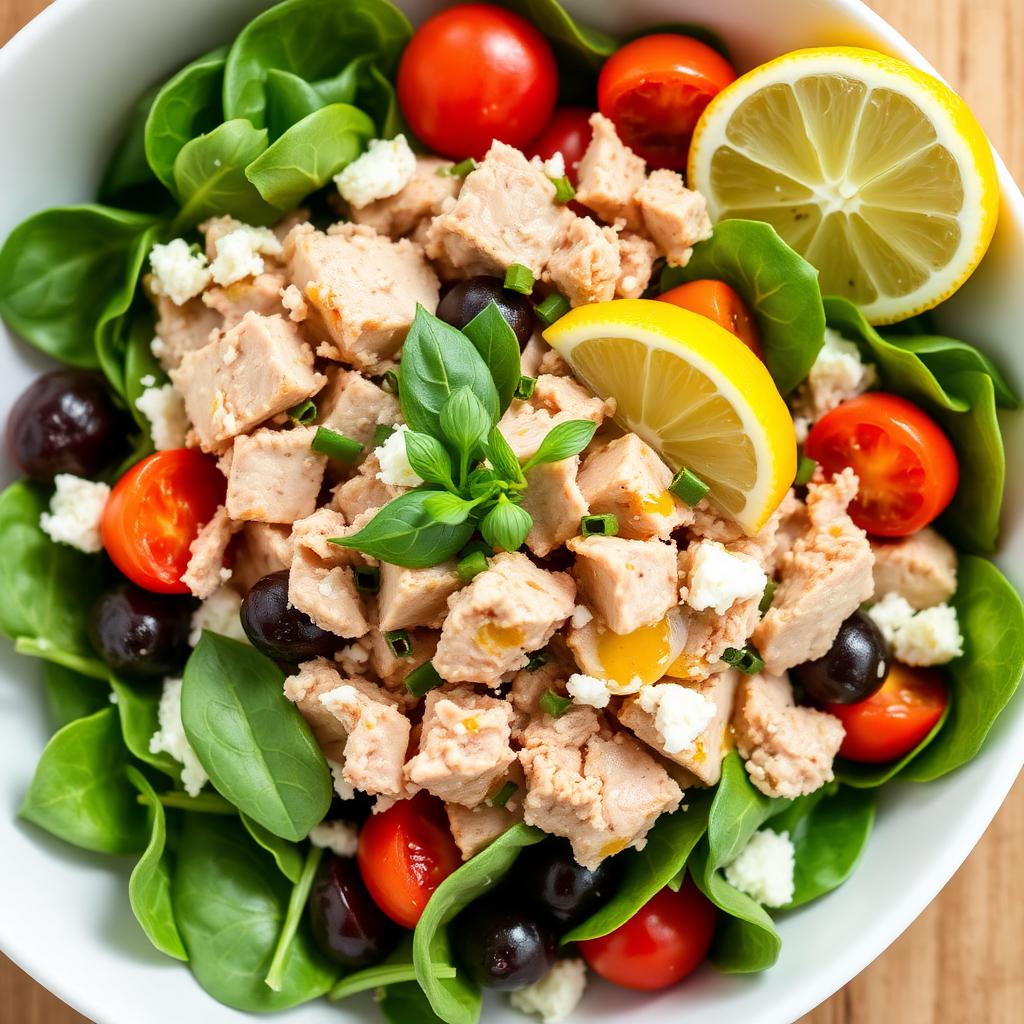
In a large mixing bowl, layer the baby spinach as the base. Top with diced cucumber, halved cherry tomatoes, kalamata olives, drained tuna, crumbled feta, and chopped chives.
Tossing & Serving
Drizzle the dressing over the salad and toss gently with two large spoons until everything is evenly coated. Taste and adjust with extra salt, pepper, or a squeeze of lemon if needed.
Divide between 2 bowls and serve immediately with a lemon wedge on the side.
Meal Prep Tips
For meal prep, pack the dressing in a separate small container and layer the salad in a mason jar — dressing at the bottom, tuna, then sturdy veggies, finishing with spinach on top. Shake and pour into a bowl when ready to eat. Keep refrigerated at 40°F (4°C) or below and use within 3 days for quality. Refrigerate within two hours, or one hour above 90°F (32°C); keep the dressing separate and discard salad left out beyond that window.
Variations
- Greek style: Add a sprinkle of dried mint and a few extra olives
- Italian style: Swap feta for low-FODMAP hard cheese like parmesan
- Protein boost: Add a sliced hard-boiled egg
Tools & Related Recipes
Use the Low FODMAP Food Checker to review unfamiliar ingredients (avoid the pickled olives that contain garlic). The Portion Calculator helps compare serving sizes; it does not certify this recipe.
Hungry for more no-cook ideas? Try our Low FODMAP Turkey Lettuce Wraps, or explore the full low FODMAP lunch collection and IBS-friendly recipes.