
Place a metal loaf tin or freezer-safe container in the freezer at least 30 minutes before you start. A pre-chilled tin freezes the custard faster and gives you a smoother texture.
In a medium saucepan, warm the lactose-free milk with half the sugar, the vanilla and the pinch of salt over medium-low heat until steam rises and small bubbles appear at the edge. Do not let it boil.
In a bowl, whisk the egg yolks with the remaining sugar until pale and slightly thickened, about 1 minute.
Slowly pour about a third of the hot milk into the yolks while whisking constantly. This tempers the eggs so they do not scramble. Pour the tempered mixture back into the saucepan.
Cook over low heat, stirring constantly with a spatula, until the custard thickens enough to coat the back of a spoon (around 78-80 C / 172-176 F). If you want a firmer scoop, whisk in the optional cornstarch slurry now and cook 1 more minute.
Strain the custard through a fine sieve into a clean bowl. Stir in the maple syrup. Cover the surface with plastic wrap and chill for at least 4 hours, or overnight, until completely cold.
Whip the chilled lactose-free cream to soft peaks. Fold it into the cold custard in three additions, keeping as much air in the mixture as you can.
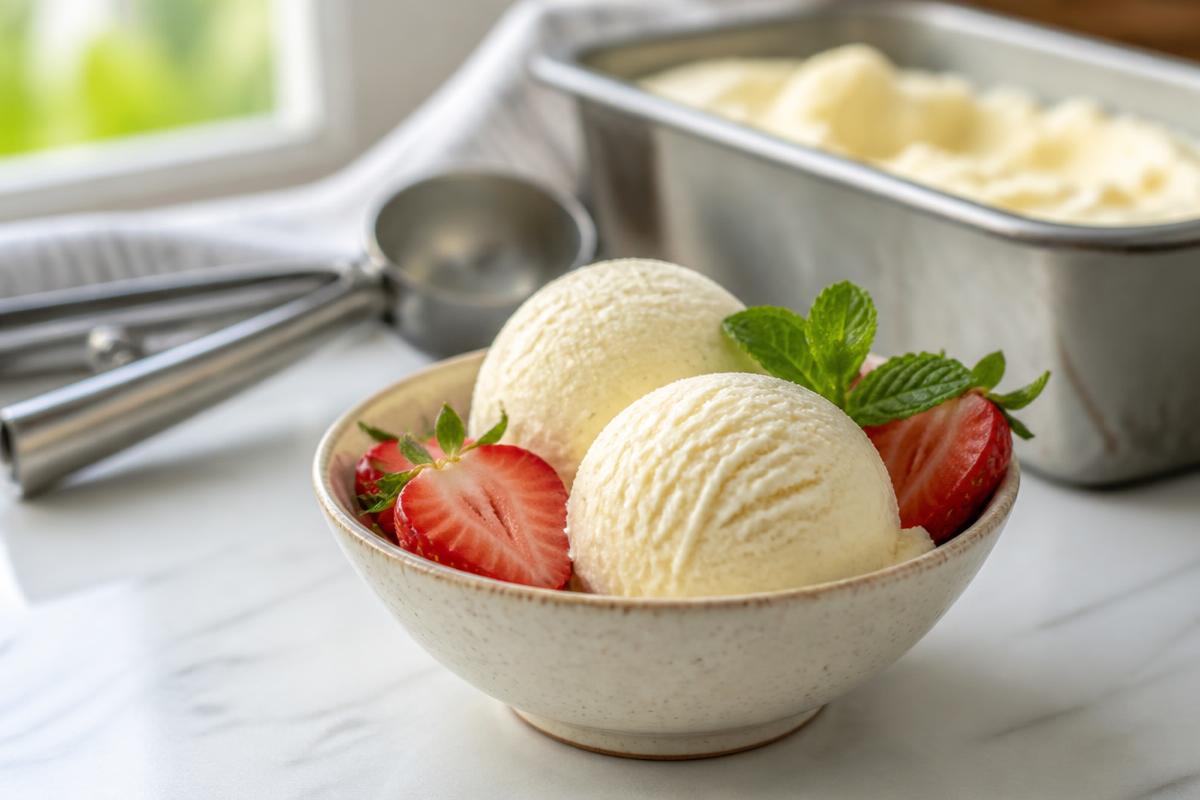
No-churn method: pour into the frozen tin, smooth the top, cover and freeze for 5-6 hours. Stir vigorously with a fork after the first 90 minutes and again 90 minutes later to break up ice crystals.
Ice cream machine method: churn the mixture for 20-25 minutes until it reaches soft-serve consistency, then transfer to the frozen tin and freeze for 2-3 hours to firm up.
Let the ice cream sit at room temperature for 5-10 minutes before scooping. Serve with sliced strawberries or a measured 20 g of blueberries.
Why This Low FODMAP Ice Cream Works
Standard ice cream is a common trigger on the low FODMAP diet for two reasons: lactose and the added sweeteners or mix-ins. A single scoop of regular dairy ice cream can carry more lactose than many people with IBS tolerate in one sitting, and commercial tubs frequently add honey, high fructose corn syrup, inulin or chicory root fibre, sorbitol, or fruit purees such as apple, pear and mango. Any one of those can push a dessert from comfortable to symptomatic.
This recipe removes each of those risks. Lactose-free cream and lactose-free milk are treated with the lactase enzyme, so the lactose is already broken down into glucose and galactose - both well absorbed. The sweetness comes from ordinary caster sugar (sucrose, low FODMAP in normal amounts) plus a small measured amount of pure maple syrup, which Monash University lists as low FODMAP at 2 tablespoons (60 ml). Egg yolks contain no FODMAPs and give the custard its rich mouthfeel without needing gums or fibre additives.
The result is a dessert that tastes like a classic French-style vanilla ice cream but stays inside elimination-phase limits when you keep to the serving size below.
Texture Tips For Smooth, Scoopable Results
Homemade ice cream can turn icy if the mixture freezes slowly. Three habits fix that. First, chill the custard completely before folding in the cream - a warm base forms large ice crystals. Second, use a shallow metal container rather than a deep plastic tub, because metal conducts cold faster. Third, stir twice during the first three hours of freezing if you are using the no-churn method.
Fat and sugar both act as natural anti-freeze agents, which is why cutting the cream or the sugar makes the batch harder and more crystalline. If your freezer runs very cold, add 1 tablespoon of vodka to the chilled custard; the alcohol lowers the freezing point slightly and keeps the ice cream soft without affecting flavour or FODMAP content.
Flavour Variations That Stay Low FODMAP
- Strawberry: fold in 150 g of pureed strawberries after whipping the cream. Keep the finished serve to about 10 medium strawberries worth per portion.
- Dark chocolate: melt 40 g of 70% dark chocolate and drizzle it into the mixture during the final stir for a stracciatella effect. Dark chocolate is low FODMAP at 30 g.
- Coffee: dissolve 1 tablespoon of instant coffee in the warm milk in step 2.
- Peanut butter swirl: ripple 2 tablespoons of pure peanut butter (no added inulin or honey) through the base before freezing.
- Maple pecan: stir in 20 g of chopped pecans, a low FODMAP nut at that portion.
Avoid mango, apple, pear, watermelon, honey, agave, sugar-free syrups containing sorbitol, xylitol or maltitol, cookie dough made with wheat flour, and anything labelled with chicory root fibre or inulin.
Storing And Serving
Press a layer of baking paper directly onto the surface of the ice cream before sealing the container. This limits freezer burn and stops ice crystals forming on top. Stored this way, the batch keeps its texture for up to 4 weeks. Scoop what you need and return the tub to the freezer quickly rather than letting the whole batch soften and refreeze, because repeated thawing is what makes homemade ice cream grainy.
If you are still in the elimination phase, serve a single 100 ml scoop and wait to see how you feel before increasing the portion. Fat content alone can trigger symptoms in some people with IBS even when FODMAPs are controlled, so a smaller serve with fresh berries is often the more comfortable choice.
Related Low FODMAP Recipes And Tools
Building a dessert rotation is much easier once you have a few reliable bases. Try the Low FODMAP Cheesecake for a make-ahead option, the Low FODMAP Brownies when you want something warm, or the Low FODMAP Chocolate Cake for celebrations. Browse the full Low FODMAP Desserts hub for more ideas.
Not sure whether an ingredient in your favourite brand is safe? Run it through the FODMAP Food Checker, find a substitute with the Ingredient Swap tool, or paste a whole recipe into the Recipe Converter to get a low FODMAP version. The Portion Calculator helps you scale serving sizes safely, and the Low FODMAP Snacks hub covers everyday options between meals.
This recipe is informational and is not medical advice. Individual tolerance varies - work with a registered dietitian for personalised guidance.