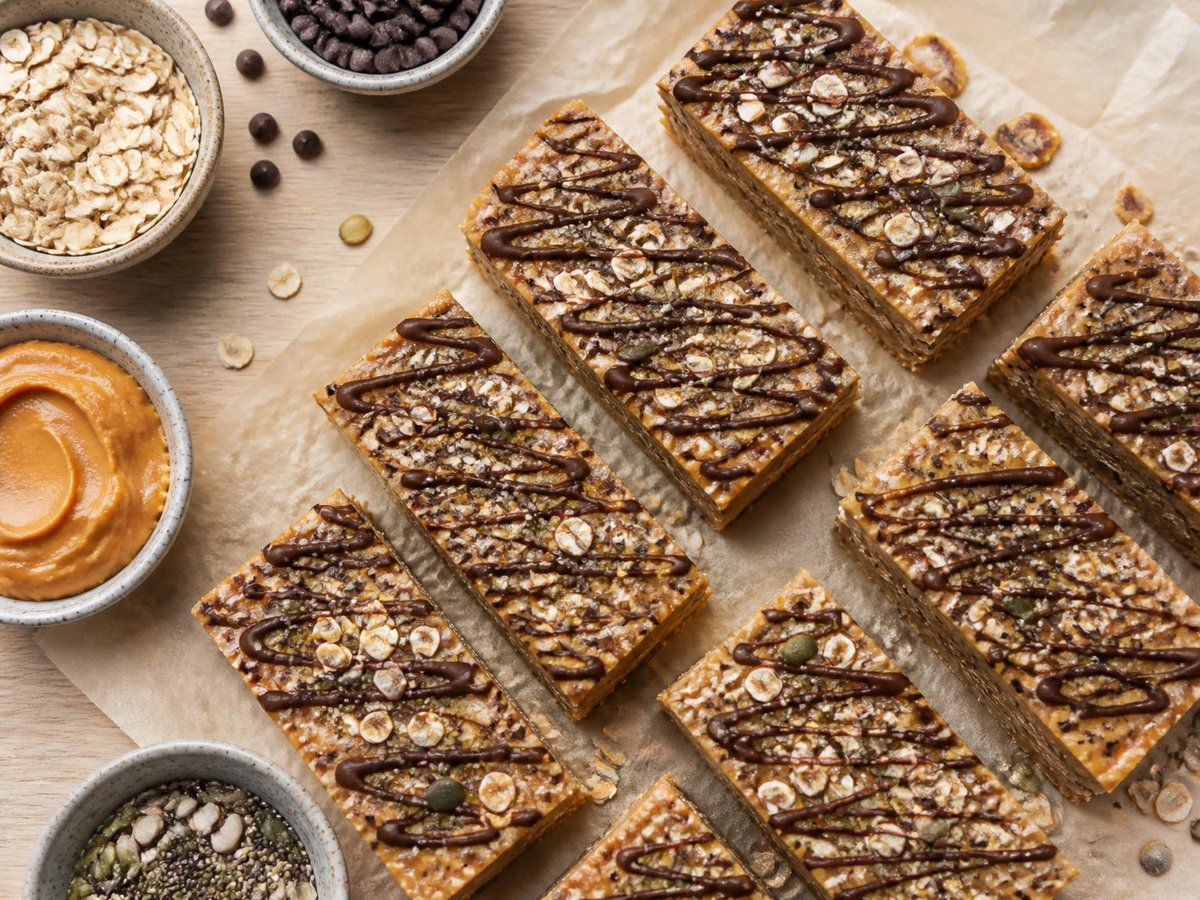
Low FODMAP protein bars are one of the easiest ways to keep a gut-friendly snack in your bag, at your desk, or in the freezer for the days when hunger hits between meals. Almost every commercial protein bar is a FODMAP minefield: inulin, chicory root fibre, whey concentrate, honey, apple juice concentrate, dates, sorbitol, maltitol and xylitol are all common. This no-bake recipe skips every one of them and still delivers roughly 9-10 g of protein per bar.
Why Most Protein Bars Trigger IBS
Manufacturers add chicory root fibre and inulin to boost the fibre number on the label. Both are fructans and are high FODMAP even in tiny amounts. Sugar alcohols ending in "-ol" (sorbitol, maltitol, xylitol, isomalt) are polyols, which draw water into the bowel and ferment quickly. Dates, dried figs, apple puree and honey pile on excess fructose. Whey protein concentrate keeps much of its lactose, while whey protein isolate is filtered to very little.
If you want to check a specific product yourself, run the label through the low FODMAP food checker or the FODMAP score estimator before you buy a box.
Ingredients That Make These Bars Safe
Rolled oats — Monash lists a low FODMAP serve of rolled oats at about 1/2 cup (52 g) dry. This recipe uses 150 g across 10 bars, which is about 15 g per bar, well inside the safe range.
Peanut butter — 100% peanuts, no honey, no molasses. A 50 g serve of peanut butter is low FODMAP; you get roughly 16 g per bar here.
Maple syrup — pure maple syrup is low FODMAP at 2 tablespoons (60 ml). This recipe uses 80 ml across 10 bars, so around 8 ml per bar.
Whey protein isolate or rice/pea protein — choose an unflavoured or vanilla isolate with no inulin, chicory root, or polyols in the ingredient list. Rice protein and pea protein isolate are both well tolerated by most people in a 20 g scoop; pea protein in very large amounts can be problematic, so stay near one scoop.
Seeds — pumpkin seeds (pepitas) and chia seeds add crunch, minerals and fibre without fructans. Chia is low FODMAP at 2 tablespoons (24 g).
Dark chocolate — 70% or higher, 30 g serve is low FODMAP. Skip milk chocolate for the coating if you are sensitive to lactose.
Step-by-Step Method
- Line the tin. Line a 20 cm x 20 cm square tin with baking paper, leaving an overhang on two sides so you can lift the slab out later.
- Toast the oats and seeds. Spread the rolled oats and pumpkin seeds on a dry baking tray and toast at 160C (320F) for 8-10 minutes until fragrant. Toasting is optional but it deepens the flavour enormously and stops the bars tasting raw. Cool for 5 minutes.
- Warm the wet mix. In a small saucepan over low heat, stir together the peanut butter, maple syrup, coconut oil, vanilla and salt for 1-2 minutes, just until pourable and glossy. Do not let it boil — overheated nut butter turns grainy.
- Combine the dry mix. In a large bowl, whisk the protein powder, chia seeds and cinnamon into the cooled oats and pumpkin seeds. Whisking the powder through the dry ingredients first prevents clumps.
- Bring it together. Pour the warm wet mix over the dry mix and fold with a sturdy spatula until every oat is coated. The mixture should hold together when you squeeze a spoonful in your fist. If it crumbles, add 1 tablespoon of lactose-free milk at a time (up to 3 tablespoons) until it clumps.
- Press hard. Tip the mixture into the tin and press it down firmly with the back of a measuring cup or the base of a glass. This is the single most important step — under-pressed bars fall apart. Press for a good 60 seconds, working from the centre outwards and paying attention to the corners.
- Chill. Refrigerate for at least 2 hours, or 30 minutes in the freezer if you are impatient.
- Add the chocolate. Melt the dark chocolate with 1 teaspoon of coconut oil in 20-second bursts in the microwave, stirring between each. Drizzle over the chilled slab and return to the fridge for 15 minutes to set.
- Cut. Lift the slab out using the paper overhang, place on a board, and cut into 10 bars with a large sharp knife in one clean downward motion. Wiping the blade with a hot cloth between cuts keeps the chocolate neat.
Texture Troubleshooting
| Problem | Cause | Fix |
|---|---|---|
| Bars crumble when cut | Not pressed firmly enough, or mix too dry | Press harder next time; add 1-3 tbsp lactose-free milk to the mix |
| Bars are sticky and soft | Too much maple syrup or a very runny nut butter | Chill fully; add 2 tbsp extra oats or 1 tbsp protein powder |
| Chalky, dry mouthfeel | Too much protein powder, or a casein-heavy blend | Reduce powder by 10 g and add 1 tbsp coconut oil |
| Grainy nut butter | Wet mix overheated | Keep the heat low and stir only until pourable |
| Chocolate blooms white | Chocolate overheated or chilled too fast | Melt in short bursts; set at fridge temperature, not freezer |
Five Flavour Variations
- Chocolate peanut — add 15 g cocoa powder to the dry mix and an extra tablespoon of maple syrup.
- Vanilla berry — fold in 30 g freeze-dried strawberries or raspberries.
- Cinnamon pecan — swap pumpkin seeds for 40 g chopped pecans and double the cinnamon.
- Salted maple — sprinkle flaky sea salt over the chocolate before it sets.
- Coconut lime — add 25 g desiccated coconut (a 1/4 cup serve is low FODMAP) plus the zest of one lime.
Avoid the obvious traps: no dates, no dried apple, no honey, no cashews, no pistachios, and no sugar-free chocolate sweetened with maltitol. If you want a swap idea for a specific ingredient, the FODMAP substitution finder and the ingredient swap tool will suggest safe alternatives.
Portion Guidance
One bar is a low FODMAP serve. Two bars in one sitting stacks oats, peanut butter and maple syrup together, which can push you over the threshold through FODMAP stacking — the effect where several moderate serves eaten within a couple of hours behave like one large high serve. If you want a bigger snack, pair one bar with a low FODMAP fruit such as a small orange or a handful of blueberries rather than eating two bars. The portion calculator helps you scale servings if you cut the slab into 8 larger bars instead of 10.
Storage and Meal Prep
- Fridge: 10 days in an airtight container, layered with baking paper.
- Freezer: 3 months. Wrap each bar individually in baking paper, then bag them. Thaw for 15 minutes at room temperature, or eat semi-frozen straight from the freezer in summer.
- Lunchboxes: the bars hold their shape at room temperature for about 4 hours; longer than that in a hot car and the chocolate will soften.
Make a double batch on Sunday and you have a full week of gut-friendly snacks. See the low FODMAP meal prep guide for a batch-cooking routine that fits this recipe in around your main meals, and build your shopping trip with the grocery list builder.
Frequently Asked Questions
Which protein powder is safest on a low FODMAP diet?
Whey protein isolate, rice protein and egg white protein are the safest choices. Avoid whey concentrate (lactose), and avoid any powder listing inulin, chicory root fibre, agave, or polyol sweeteners. Soy protein isolate is fine, but protein made from whole soybeans is not.
Can I make these bars without protein powder?
Yes. Replace the 60 g of powder with 60 g of extra rolled oats plus 20 g of pumpkin seeds. The bars become more of a flapjack-style snack bar with about 5 g protein each.
Are these bars nut free?
Substitute the peanut butter with sunflower seed butter or pumpkin seed butter in the same quantity. Both are low FODMAP and behave almost identically when warmed.
Do I need to bake them?
No. This is a no-bake recipe; the only oven step is optional toasting. If you prefer a firmer, drier bar, bake the pressed slab at 170C (340F) for 15 minutes and cool completely in the tin before cutting.
Are they suitable during the elimination phase?
Yes, provided you use compliant ingredients and stick to one bar per serve. Read the elimination phase guide if you are still in the first weeks of the diet.
Can I use honey instead of maple syrup?
No. Honey is high in excess fructose and is not low FODMAP. Pure maple syrup, rice malt syrup, or golden syrup are the safe liquid sweeteners.
More Low FODMAP Snacks
Try the low FODMAP crackers for a savoury option, browse the full low FODMAP snacks collection, or check the breakfast recipes hub for more portable morning ideas. New to all of this? Start with getting started on the low FODMAP diet.
This article is for general information only and is not medical advice. FODMAP tolerance is individual. Work with a registered dietitian before starting or changing an elimination diet, especially if you have other medical conditions.