
Why Shop-Bought Pasta Sauce Triggers IBS
Turn over almost any jar of marinara or pasta sauce and the first three ingredients after tomatoes are usually onion, garlic and "natural flavours". Onion and garlic are the most concentrated sources of fructans in the Western diet, and fructans are the FODMAP group most consistently linked to bloating, wind, cramping and urgency in people with IBS. There is no safe portion of onion — it is not a "small amount is fine" ingredient — which is why a single serving of a supermarket sauce can undo an otherwise careful low FODMAP day.
The good news: marinara does not need onion or garlic at all. Flavour in a great tomato sauce comes from three things — good tomatoes, patient simmering, and fat that carries aroma. This recipe delivers all three. If you are unsure about any brand or ingredient before it goes in the pan, run it through the FODMAP Food Checker first.
Equipment
A wide, heavy-based saucepan or sauté pan (24–26 cm) works best. A wide pan evaporates water faster, which is what concentrates the tomato flavour. You will also need a wooden spoon and, optionally, a stick blender if you prefer a completely smooth sauce.
Method
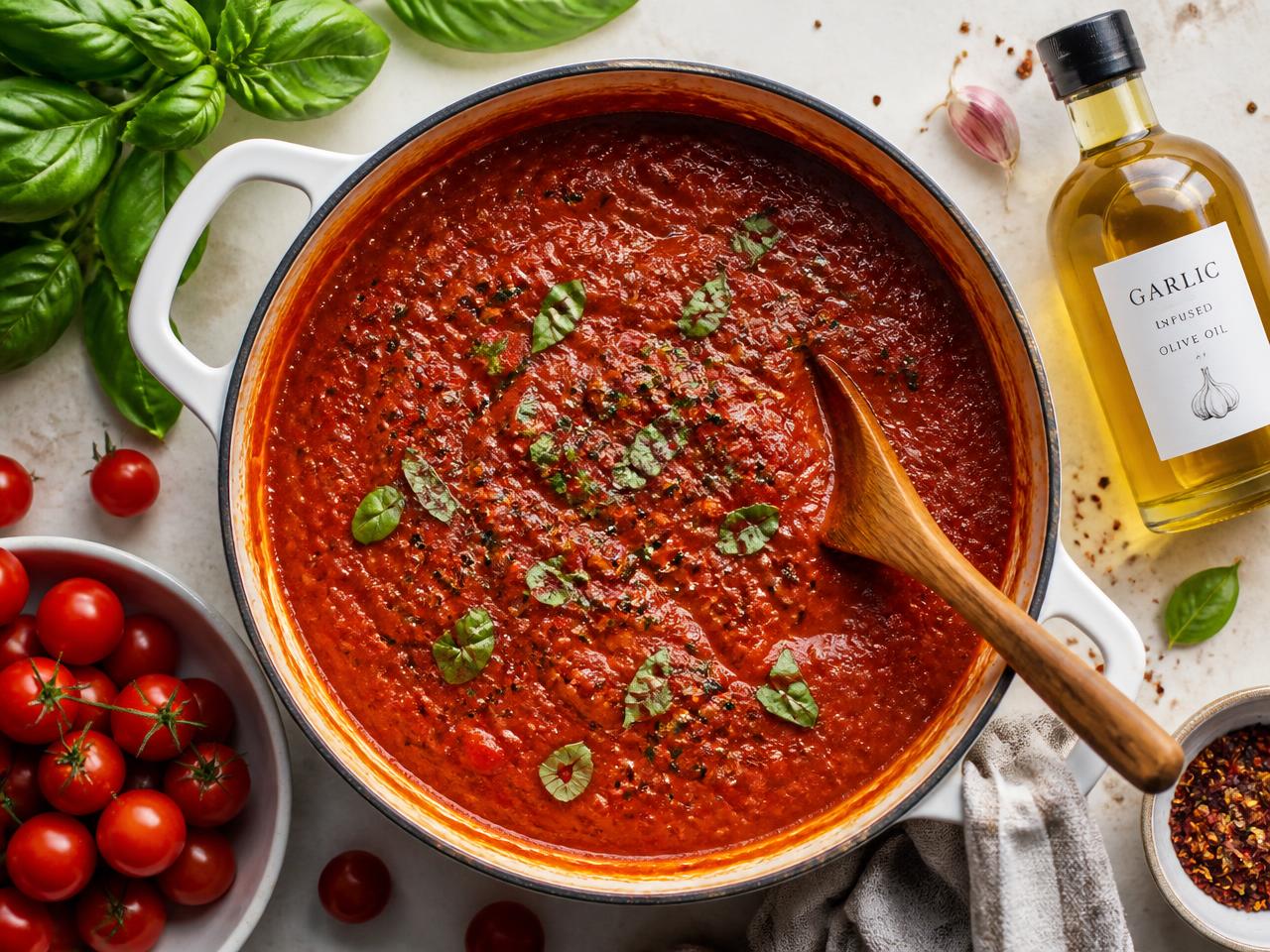
Step 1 — Warm the infused oil (2 minutes). Place the garlic-infused olive oil in your cold pan and set it over medium-low heat. Do not let it smoke; you want it warm, not hot. This oil is the backbone of the recipe: the garlic aroma compounds are fat-soluble and transfer into the oil, while the fructans that cause symptoms are water-soluble and stay behind in the discarded garlic. That single distinction is what makes garlic-infused oil green-light on the Monash app while fresh garlic is firmly red.
Step 2 — Sweat the leek greens and carrot (5–6 minutes). Add the chopped dark green leek tops and the grated carrot. Stir and cook gently until the leek softens and smells sweet. Use only the dark green leaves — the white bulb is high in fructans. The grated carrot dissolves into the sauce over time and replaces the natural sweetness that onion would normally provide, so do not skip it.
Step 3 — Toast the tomato paste (2 minutes). Push the vegetables to one side, add the tomato paste, and let it fry in the oil until it darkens from bright red to brick red. This caramelises the sugars in the paste and builds the savoury, almost meaty depth that separates a homemade sauce from a watery one. Stir constantly so it does not scorch.
Step 4 — Add tomatoes and simmer (25–30 minutes). Pour in the crushed tomatoes and the water, then add the dried oregano, dried basil, salt and pepper. Bring to a gentle bubble, lower the heat, and leave the pan barely simmering, half-covered, for 25–30 minutes. Stir every 5–8 minutes and scrape the base. The sauce is ready when a spoon dragged through the middle leaves a channel that closes slowly rather than instantly.
Step 5 — Balance the acidity (1 minute). Taste. If the tomatoes are sharp, add the maple syrup a quarter-teaspoon at a time — you are neutralising acid, not making it sweet. Then add the red wine or balsamic vinegar, which lifts the whole sauce and mimics the brightness onion would add. Keep balsamic to a maximum of 1 tablespoon across the batch to stay within the low FODMAP serve.
Step 6 — Finish with fresh herbs (1 minute). Take the pan off the heat, stir through the torn fresh basil and the parsley, and put the lid on for two minutes. Adding fresh basil off the heat keeps its perfume intact; boiled basil tastes flat and slightly bitter. Check the seasoning one final time — a properly salted tomato sauce tastes noticeably more "tomatoey".
Step 7 — Choose your texture (optional). For a rustic sauce, serve as is. For a silky sauce for pizza bases or lasagne, blitz briefly with a stick blender. For an extra-thick sauce, simmer uncovered for another 8–10 minutes.
How to Serve It
- Pasta: Toss with 145 g cooked gluten-free or spelt sourdough pasta per person and a splash of the starchy cooking water to make the sauce cling.
- Pizza: Spread 2–3 tablespoons over a base — see the low FODMAP bread hub for dough ideas.
- Chicken parmigiana: Spoon over pan-fried chicken and top with hard cheese. More ideas on the low FODMAP chicken recipes hub.
- Meatballs: Simmer beef or pork meatballs directly in the sauce for 15 minutes. Pair with a green salad and the low FODMAP salad dressing.
- Shakshuka style: Crack eggs into the simmering sauce for a fast dinner. See the breakfast hub for more egg-based options.
Storage and Batch Cooking
Cool the sauce completely, then refrigerate in a sealed glass jar for up to 5 days. It freezes exceptionally well for 3 months — freeze in 250 ml portions or in an ice-cube tray so you can pull out exactly what one meal needs. Reheat gently with a tablespoon of water; never boil hard, as that dulls the herbs. Double the batch on a Sunday and you have four weeknight dinners covered. Plan those meals out with the meal planner and build your shop with the grocery list builder.
Troubleshooting
- Sauce tastes flat. It is almost always under-salted, or you skipped toasting the tomato paste. Add salt in small pinches until the tomato flavour jumps forward.
- Sauce tastes sour or metallic. The tomatoes were acidic. Add maple syrup a quarter-teaspoon at a time, and simmer 5 minutes longer.
- Sauce is watery. Simmer uncovered — do not add thickeners. Evaporation concentrates flavour at the same time.
- You miss the onion hit. Add 1/4 teaspoon gluten-free asafoetida powder in Step 3. Used at this dose it gives a convincing allium background note without fructans.
- Symptoms after eating. Check your portion of pasta and cheese rather than the sauce — stacking several moderate servings is a common cause. The portion calculator helps you see where the load is coming from, and the symptom tracker will show whether the pattern repeats.
Ingredient Swaps
Whole peeled canned tomatoes crushed by hand work in place of crushed tomatoes and often taste better. Passata works too, but reduce the added water to 60 ml. If you cannot find garlic-infused oil, plain olive oil plus asafoetida is the next best option. Fresh tomatoes can replace canned in peak season: use 900 g, peeled and chopped, and simmer 15 minutes longer. For more one-to-one replacements, use the FODMAP substitution finder or the ingredient swap tool.
Medical Disclaimer
This recipe and the information alongside it are for general educational purposes only and are not medical advice. Individual FODMAP tolerance varies, and the low FODMAP diet is designed to be followed as a short elimination phase followed by structured reintroduction. Always work with a registered dietitian or your doctor before making significant dietary changes, and seek medical advice for persistent or worsening digestive symptoms.