
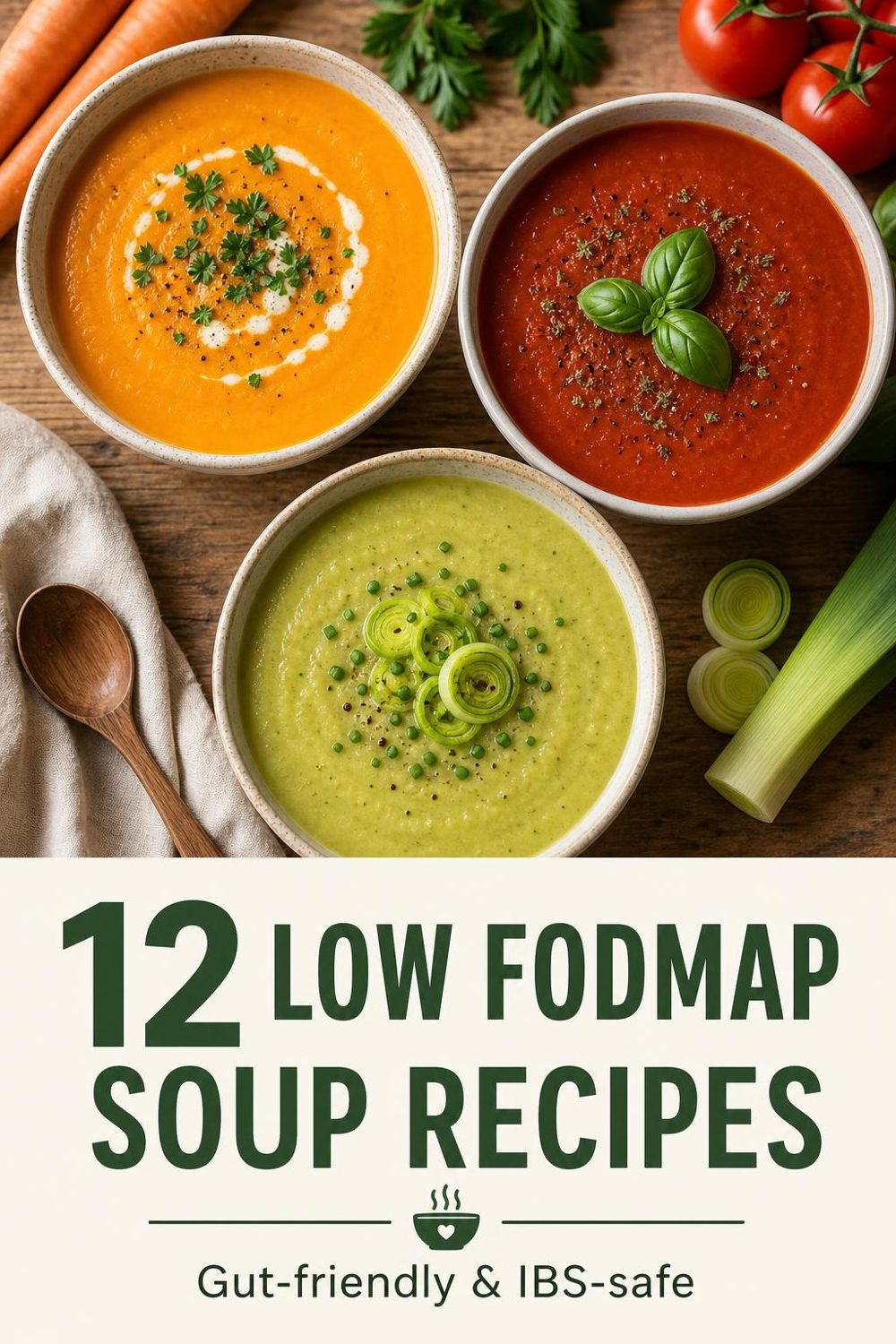
Soup should be the easiest meal on a low FODMAP diet — one pot, cheap ingredients, gentle on the gut. In practice it is one of the hardest, because almost every soup recipe and every carton of stock on the shelf starts with onion and garlic, the two biggest fructan sources in a Western kitchen.
The good news is that you do not need either. Once you know how to build flavour with garlic-infused oil, leek greens, spring onion tops, roasted vegetables and herbs, low FODMAP soup tastes richer than the onion-heavy version it replaced. Below are 12 soups that follow that approach, each with the ingredients that make it IBS-friendly, the reason it works, and one tip that actually changes the result.
Key takeaways
- Onion and garlic are unnecessary: garlic-infused oil, leek greens and spring onion greens deliver the same savoury base because fructans are water-soluble, not oil-soluble.
- Portion size decides whether a soup is low FODMAP — zucchini, pumpkin, coconut milk and canned tomato are all safe in moderate servings, not unlimited ones.
- Plain meat, fish, eggs, rice, quinoa and potato contain no FODMAPs, so they are the safest way to make a soup filling.
- Most commercial stocks contain onion and garlic. Check the label or make your own from vegetable scraps that are low FODMAP.
- Soup freezes well, which makes it the single best batch-cooking strategy during the elimination phase.
Build a full low FODMAP week around these soups
- Pair a bowl with our low FODMAP bread for a proper lunch.
- Batch-cook alongside these low FODMAP dinner recipes.
- Need lighter options? Try our low FODMAP lunch ideas.
- Sweet finish: low FODMAP desserts.
- Stock your fridge with safe produce from the low FODMAP vegetables guide.
- Snack between meals with low FODMAP snacks.
- Make your own base with our low FODMAP marinara sauce or salad dressing.
- Not sure about an ingredient? Use the low FODMAP food checker.
- Have a favourite family soup? Run it through the recipe converter.
- Swap out onion and garlic with the FODMAP substitution finder.
- Keep servings safe with the portion calculator.
- Plan your week in the meal planner and shop with the grocery list builder.
- Track how your gut responds using the symptom tracker.
- New to the diet? Start with our low FODMAP guides and chicken recipes.
The 12 soups
1. Creamy Carrot & Ginger Soup
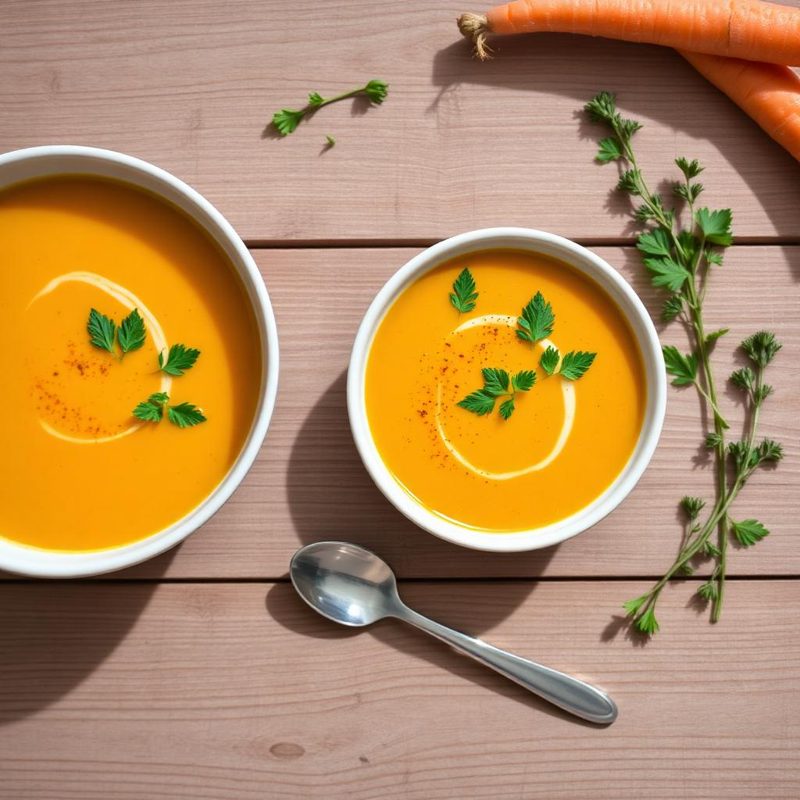
Key ingredients: carrot, fresh ginger, garlic-infused olive oil
Carrots are low FODMAP in any normal serving, and fresh ginger adds warmth without fructans. Sweat the carrots in garlic-infused oil for that roasted-garlic flavour with none of the fructans (the FODMAPs in garlic are water-soluble, not oil-soluble), then simmer in low FODMAP stock and blend until silky.
Tip: Blend with a stick blender for 90 seconds longer than feels necessary — that is what makes it taste creamy without any cream.
2. Cosy Chicken & Rice Soup
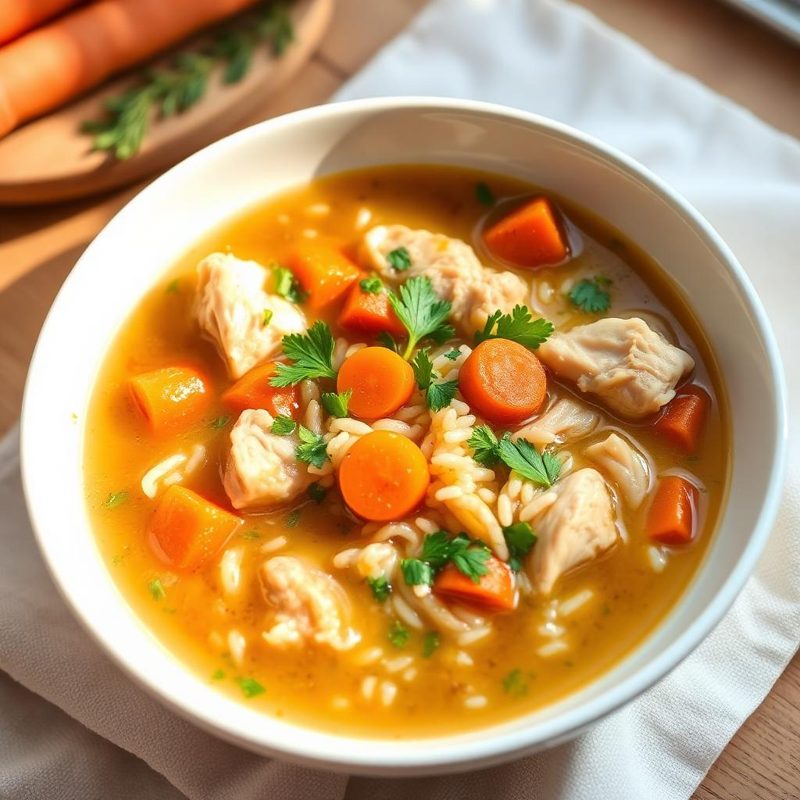
Key ingredients: chicken thigh, white rice, carrot, leek greens
The classic comfort bowl, rebuilt for IBS. Skip onion and use only the green tops of leek plus a splash of garlic-infused oil. White rice is naturally low FODMAP and thickens the broth as it sits.
Tip: Cook the rice separately if you want leftovers — it keeps soaking up broth in the fridge.
3. Silky Pumpkin Soup
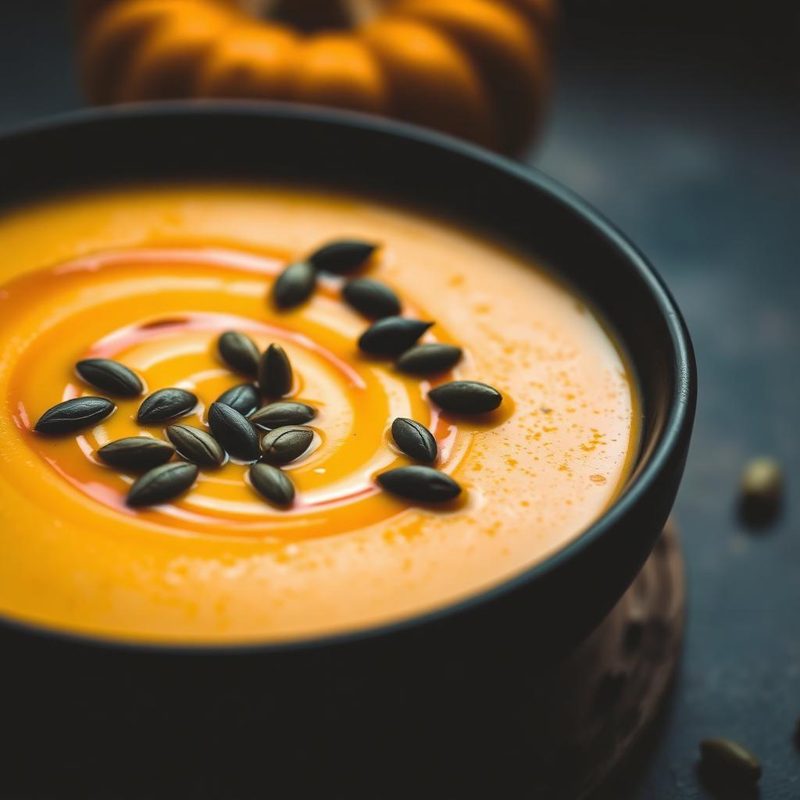
Key ingredients: canned pumpkin (Japanese/kabocha), lactose-free cream, nutmeg
Kabocha (Japanese pumpkin) is low FODMAP at 1/2 cup, while butternut squash is only safe at around 1/4 cup — so portion matters more than the pumpkin itself. Finish with lactose-free cream for a velvet texture.
Tip: Toast the nutmeg and pumpkin seeds in a dry pan first; it doubles the aroma.
4. Potato & Leek Green Soup
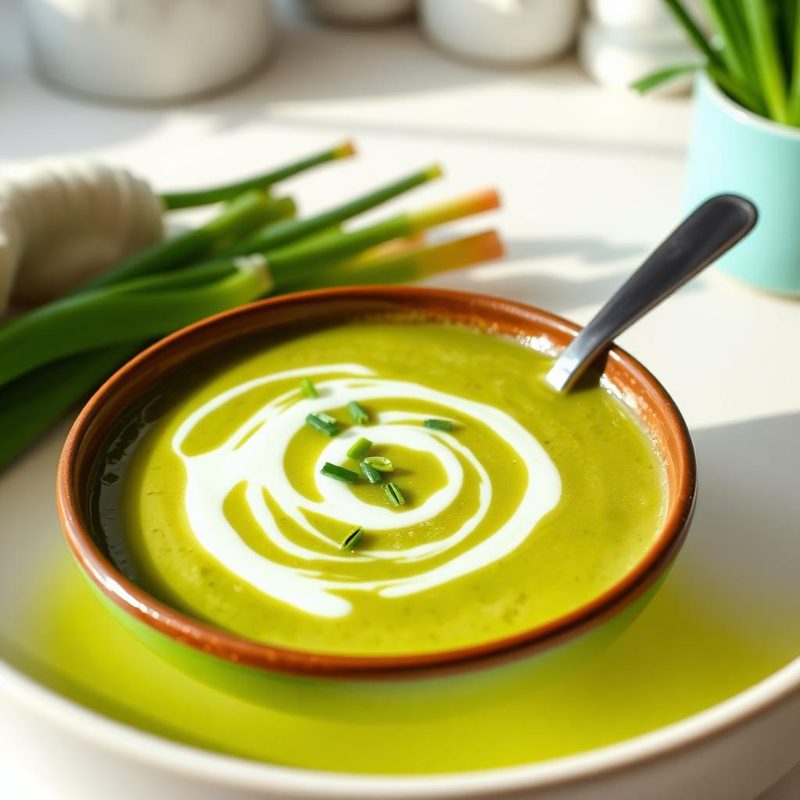
Key ingredients: potato, leek green tops, chives, lactose-free milk
Traditional potato-leek soup is a fructan bomb because of the white leek bulb and onion. Use only the dark green leek leaves — they carry the flavour but very little of the FODMAP load.
Tip: Potato thickens naturally, so you need far less cream than most recipes claim.
5. Ginger Chicken Rice Noodle Soup
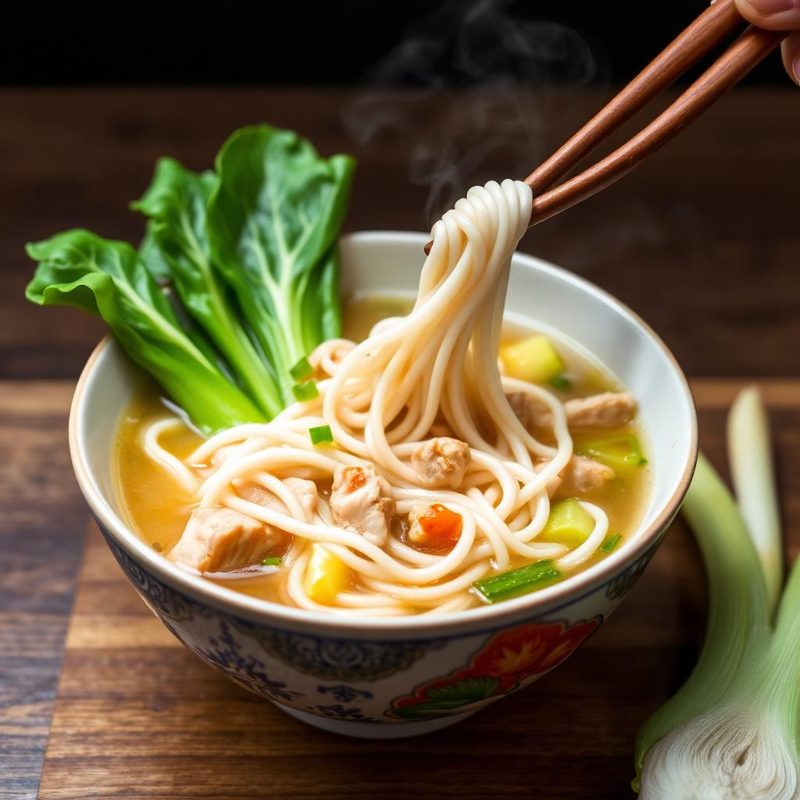
Key ingredients: rice noodles, chicken, bok choy, ginger, spring onion greens
Rice noodles are gluten free and low FODMAP, bok choy is safe at generous servings, and spring onion greens give an allium hit without the fructans of the white part.
Tip: Pour the hot broth over the noodles in the bowl instead of boiling them in the pot, so they never turn to mush.
6. Roasted Red Pepper & Tomato Soup
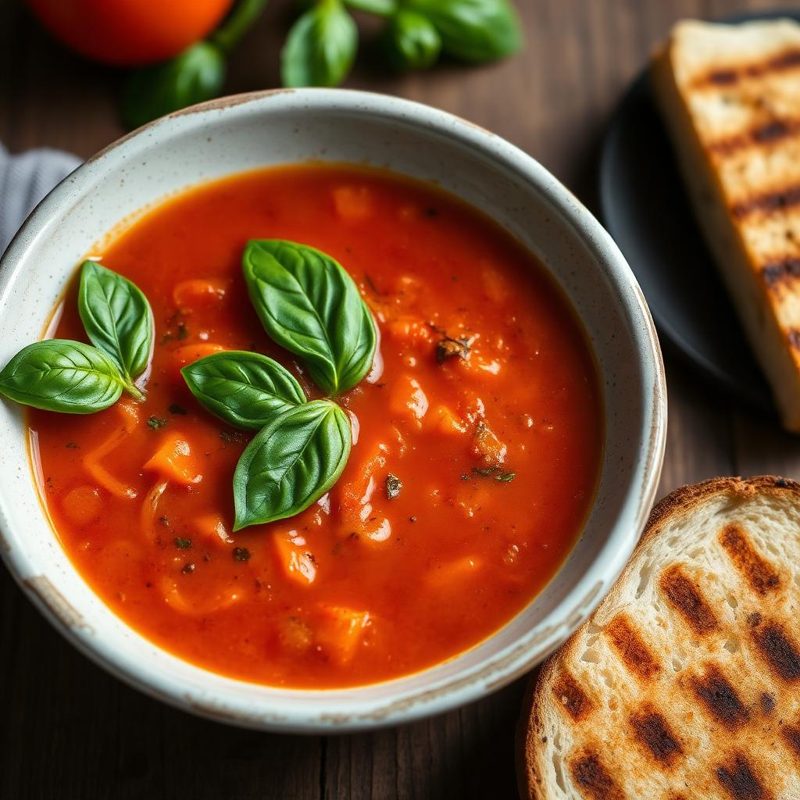
Key ingredients: red bell pepper, canned tomatoes, basil, garlic-infused oil
Red bell pepper is low FODMAP at 1/2 medium pepper and canned tomatoes are safe at around 100 g per serve. Roasting concentrates sweetness so you do not need onion for depth.
Tip: A teaspoon of maple syrup rounds off the acidity — stay within 2 tbsp of maple per serve overall.
7. Hearty Beef & Vegetable Soup
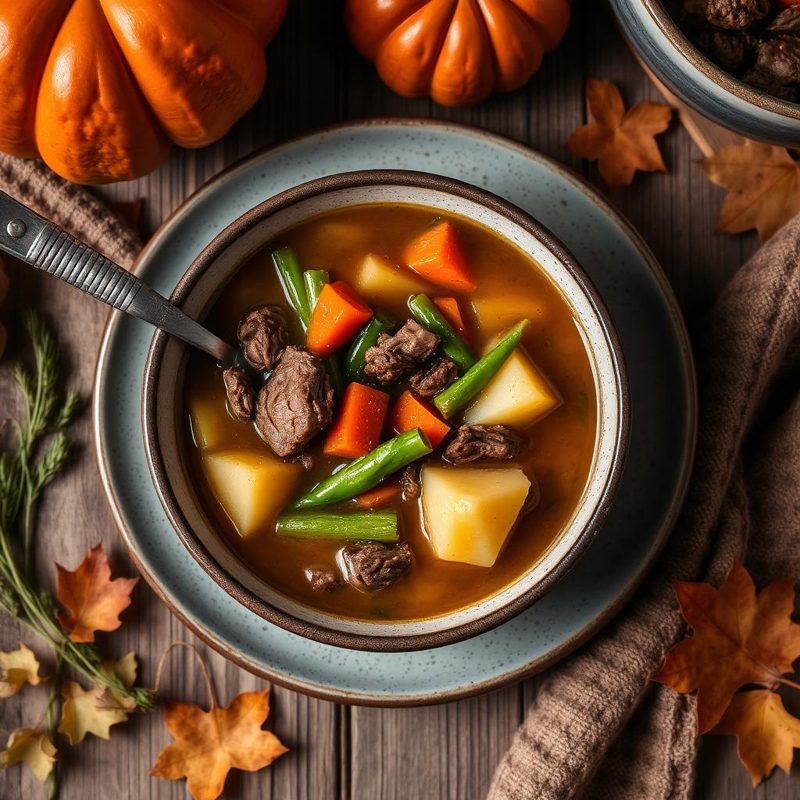
Key ingredients: beef chuck, potato, carrot, green beans
Plain meat has no FODMAPs at all, so the only thing to watch is the vegetables and the stock. Green beans (15 pods) and potato are safe staples for a filling bowl.
Tip: Brown the beef hard before adding liquid — that crust is where the flavour lives when onion is off the table.
8. Creamy Zucchini & Parmesan Soup
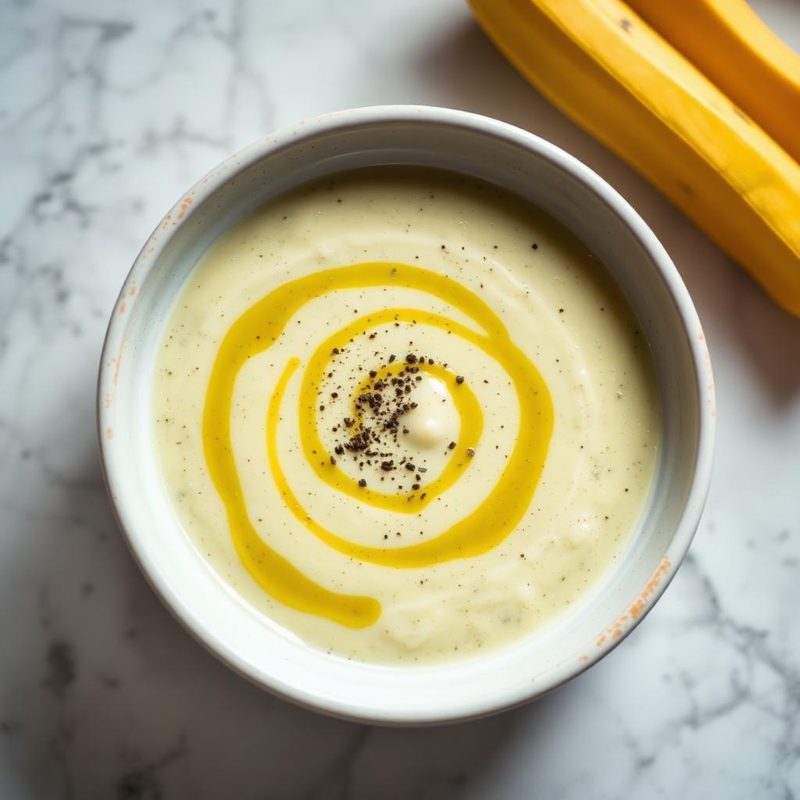
Key ingredients: zucchini, parmesan, black pepper, olive oil
Zucchini is low FODMAP at 1/3 cup (about 65 g) per serving, so keep portions moderate and bulk out with potato. Aged parmesan is very low in lactose and adds savoury depth.
Tip: Do not brown the zucchini — keep it pale and it blends into a pastel, silky soup.
9. Thai-Style Coconut Chicken Soup
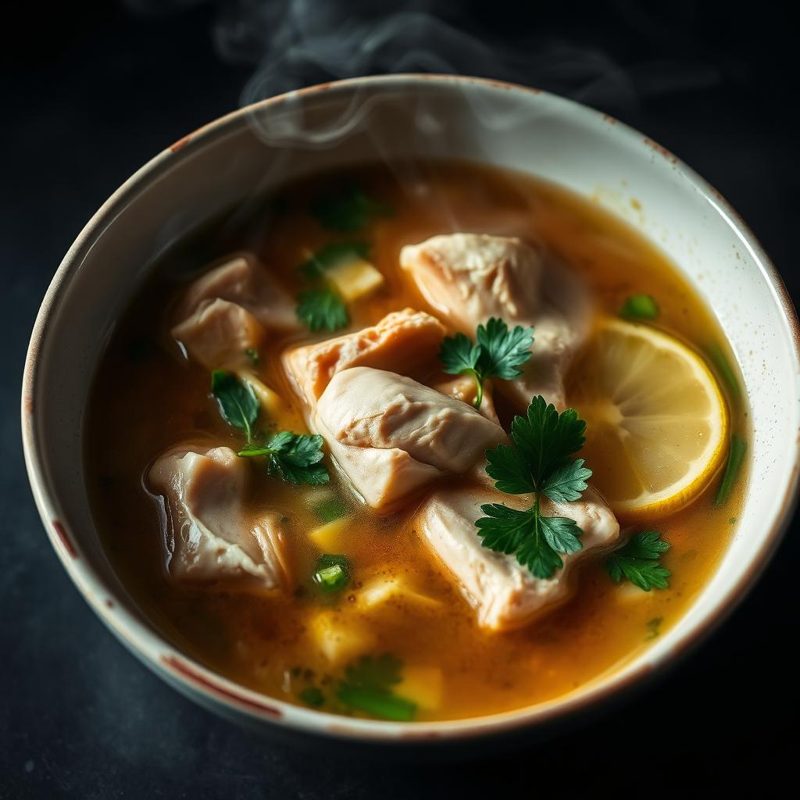
Key ingredients: canned coconut milk, chicken, lemongrass, lime, coriander
Coconut milk is low FODMAP at around 1/2 cup per serve, and lemongrass, lime and coriander deliver a huge amount of flavour with zero FODMAP cost.
Tip: Add the lime juice off the heat so it stays bright rather than turning bitter.
10. Clear Miso-Style Tofu Soup
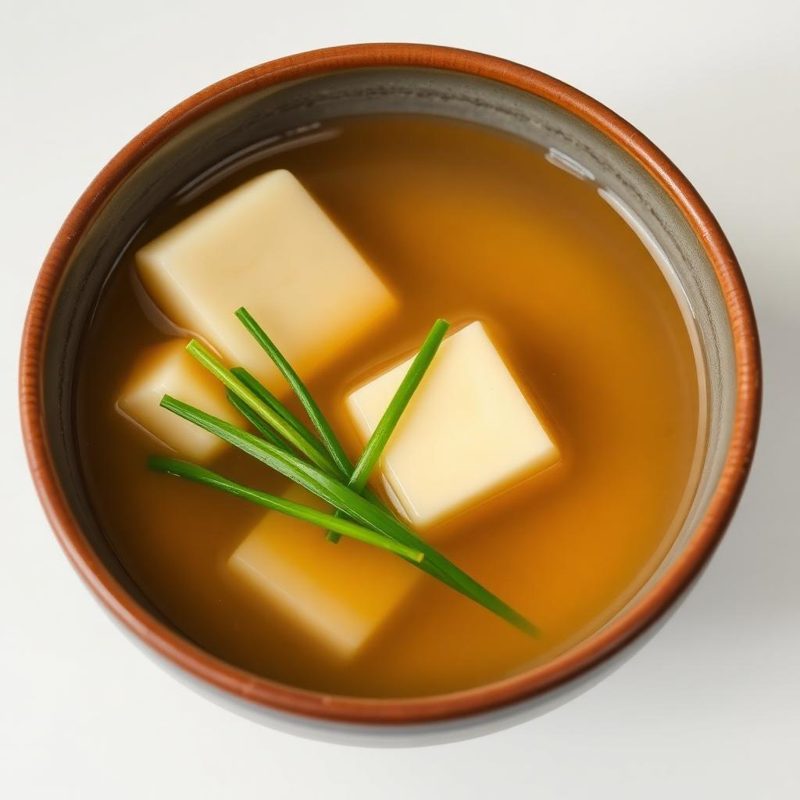
Key ingredients: firm tofu, low FODMAP dashi or stock, spring onion greens
Firm, drained tofu is low FODMAP because the fructans and GOS stay behind in the whey, while silken tofu is not. Keep miso paste to about 2 tbsp per serve.
Tip: Never boil the broth after adding miso — it kills the aroma.
11. Parsnip & Turmeric Soup
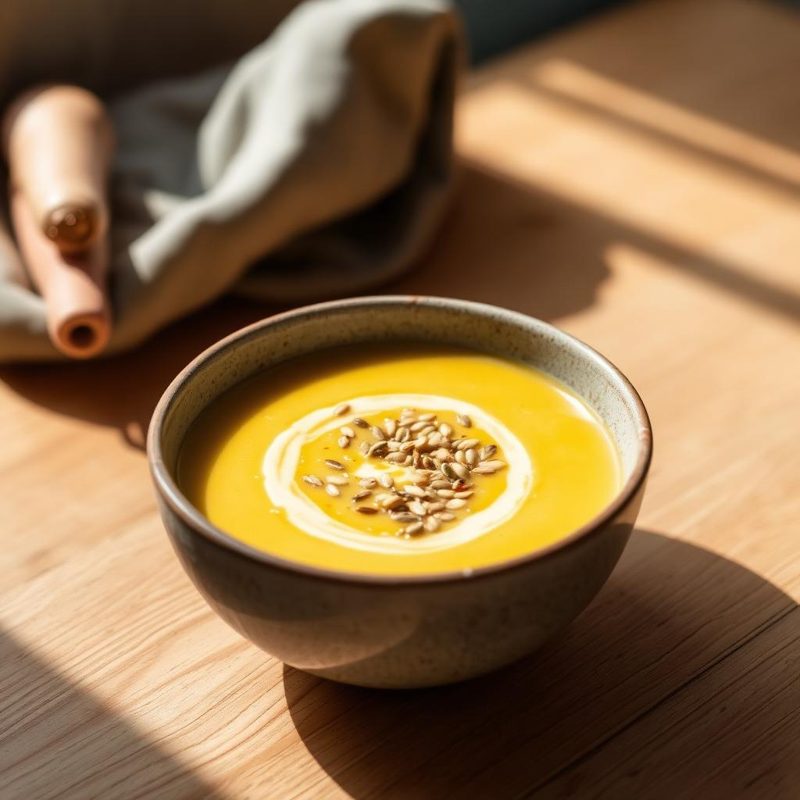
Key ingredients: parsnip, turmeric, lactose-free cream, sunflower seeds
Parsnip is low FODMAP in generous servings and turns beautifully sweet when roasted, which makes it an ideal onion replacement in soups.
Tip: Roast the parsnip at 200 C until the edges caramelise before it goes anywhere near the pot.
12. Quinoa Vegetable Minestrone
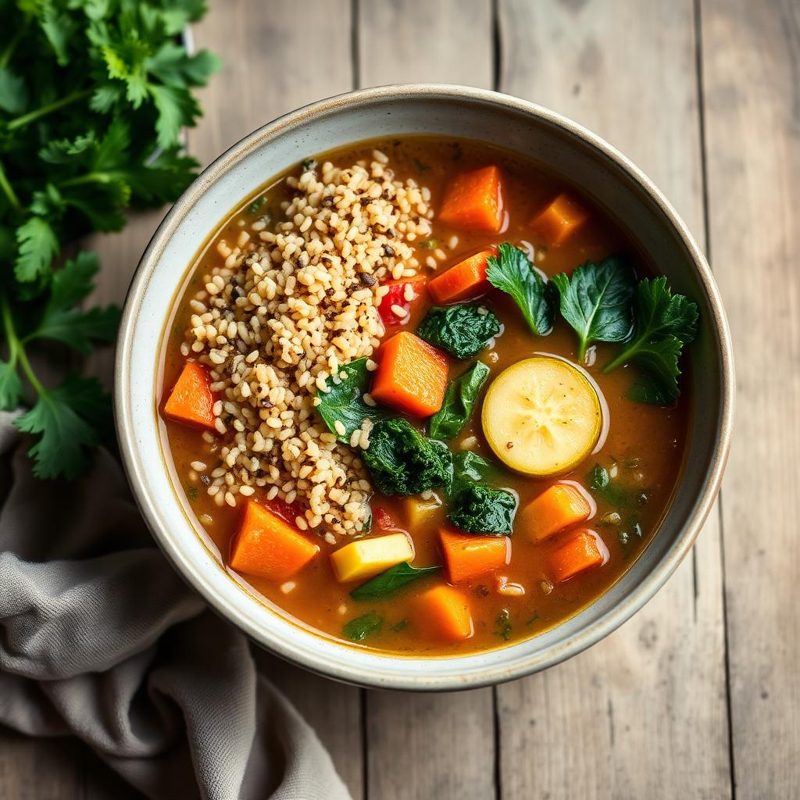
Key ingredients: quinoa, carrot, zucchini, kale, canned tomatoes
A minestrone without beans or pasta still works: quinoa brings protein and body, kale adds fibre, and canned tomato gives that classic Italian base.
Tip: Cook the quinoa in the soup for the last 15 minutes only, so it keeps a little bite.
How to make any soup low FODMAP
- Fix the base. Replace onion and garlic with 1–2 tbsp garlic-infused olive oil plus finely sliced leek green or spring onion green. Add them at the start, exactly where the onion would have gone.
- Fix the stock. Read the label for onion powder, garlic powder, "vegetable extract" and inulin/chicory root. If in doubt, simmer your own from carrot, celery (limit to a small piece), leek greens, ginger and parsley.
- Choose safe bulk. Potato, white rice, quinoa, polenta, carrot, parsnip, green beans, bok choy and kale all take generous servings.
- Watch the moderate ones. Zucchini, pumpkin, sweet potato, canned tomato, coconut milk and celery are fine in measured portions and problematic in large ones. Weigh them once and you will learn the volumes by eye.
- Skip the classic traps. No cannellini or borlotti beans, lentils in large amounts, cauliflower, mushrooms, sweetcorn beyond a small serve, wheat pasta, or cream from regular dairy — use lactose-free cream or milk instead.
- Finish with acid and herbs. Lemon juice, lime, vinegar, basil, coriander, parsley, chives and pepper are all low FODMAP and are what stop a no-onion soup tasting flat.
Batch cooking and storage
All 12 soups keep 3–4 days in the fridge in a sealed container, and 3 months in the freezer. Freeze in single portions so a bad-gut day never turns into a takeaway. Blended soups may separate slightly on thawing — reheat gently and whisk. Add noodles, rice and quinoa fresh on the day of serving rather than freezing them in the liquid, and stir dairy or lactose-free cream in after reheating so it does not split.
If you are still in the strict elimination phase, keep each pot to one moderate-FODMAP ingredient only. Stacking zucchini, canned tomato and coconut milk in the same bowl can push the total FODMAP load over your threshold even when each individual portion is technically "green".
Frequently asked questions
Is store-bought soup ever low FODMAP?
Rarely, unless it is specifically certified. Onion and garlic powder appear in almost all commercial soups and stocks, often listed vaguely as flavouring or vegetable extract. Certified low FODMAP stocks do exist and are worth keeping in the cupboard.
Can I use onion for flavour and then remove it?
No. Fructans leach into the liquid, so fishing the onion out later does not make the soup safe. Use garlic-infused oil or asafoetida (a pinch) instead.
Are lentil and bean soups completely out?
Not entirely. Canned, well-rinsed lentils are low FODMAP at about 1/2 cup, and canned chickpeas at 1/4 cup, because the GOS leaches into the canning liquid. Dried, home-cooked pulses are much higher.
What about creamy soups if I am lactose intolerant?
Use lactose-free cream or milk, or blend in potato, parsnip or a small amount of rice — all three give a creamy mouthfeel without dairy.
How big should a serving be?
Around 300–400 ml is a normal bowl. Doubling a serve also doubles the FODMAP load, which is the most common reason a "safe" soup causes symptoms.
Pin this for later
Save the pin at the top of this post so these 12 soups are one tap away next time you are standing in front of an open fridge wondering what is safe to eat.
Medically reviewed content is for informational purposes only and is not medical advice. FODMAP tolerance is highly individual. Always work with a registered dietitian or your doctor before starting, changing or ending an elimination diet, especially if you have other medical conditions. Portion guidance reflects current Monash University FODMAP app data, which is updated regularly.


